



Key Takeaways
- Timing flexibility: EAAs can be taken before, during, or after training. Each window delivers real benefits, and the best choice depends on your specific goal.
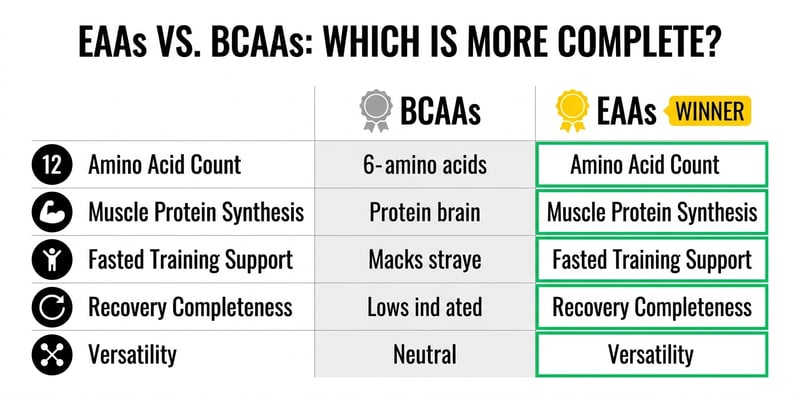
- More complete than BCAAs: BCAAs are just three of the nine essential amino acids. EAA supplements provide the full profile your body needs to trigger and sustain muscle protein synthesis.
- Muscle protection and recovery: EAAs reduce muscle breakdown during training, accelerate repair after it, and can help reduce delayed onset muscle soreness (DOMS).
- Low-calorie and versatile: EAA powders mix easily with water and add minimal calories, making them practical at any time of day including fasted training and rest days.
- Broader benefits: Beyond muscle, EAAs support fat metabolism, mood regulation, and sleep quality through amino acids like tryptophan.
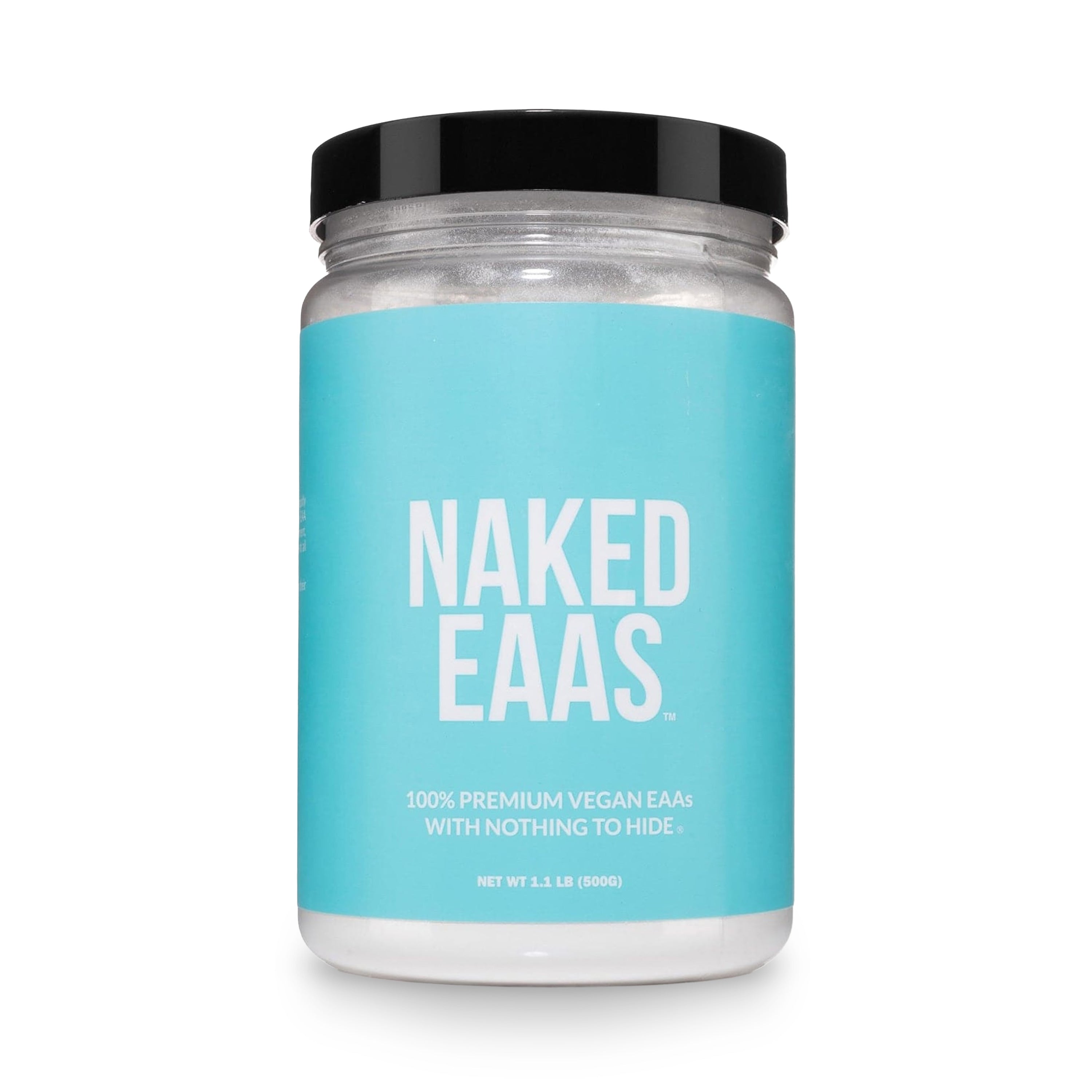
Essential Amino Acids Supplement | Naked EAAs - 50 Servings
- No Artificial Additives
- Made in the USA
- Quality Verified
- Expert Nutrition Support
When to Take EAAs: Before, During, or After Your Workout?
If you're already taking BCAAs before training, or reaching for a protein shake after, you've probably wondered whether EAAs fit into the picture and when exactly to use them. The short answer: all three timing windows work. The longer answer is that each one serves a different purpose.
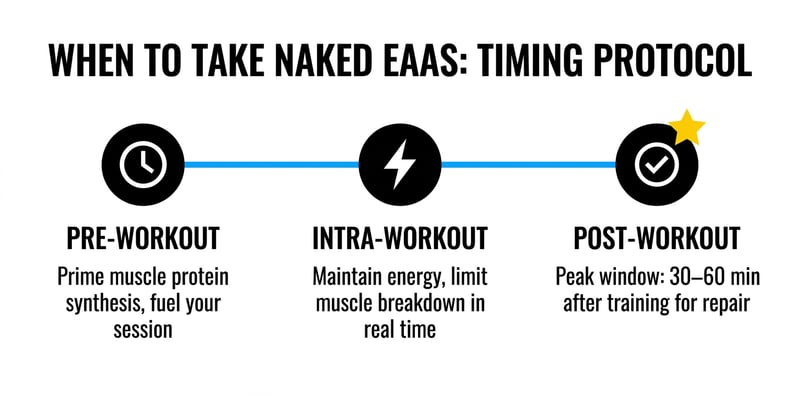
Taking EAAs before training primes muscle protein synthesis and provides fuel going into your session. Taking them during training helps maintain energy and limits muscle breakdown in real time. Taking them after training accelerates repair and supports recovery. None of these is wrong. The right choice depends on what you're trying to achieve.
What makes EAAs particularly flexible is their format. Unlike a thick protein shake, EAA powder mixes into water for a light, low-calorie drink you can sip at any point. That means there's no practical barrier to using them across multiple timing windows, and the research supports doing so.
📊 What Research Says
A review published in the Journal of the International Society of Sports Nutrition found that EAA supplementation taken in close proximity to resistance exercise produced greater improvements in muscle protein synthesis than supplementation taken further from training, reinforcing the value of the "anabolic window" around your workout. [1]
Read on for a breakdown of what the research actually shows for each timing scenario, how much to take, and who benefits most from EAA supplementation.
What Are EAAs? (And How Are They Different from BCAAs?)
Every protein in the human body is assembled from amino acids. There are 20 of them in total. The body can manufacture 11 on its own, so those are classified as nonessential. The remaining nine must come from food or supplementation because the body cannot produce them. These are the essential amino acids:
- Leucine
- Isoleucine
- Valine
- Lysine
- Methionine
- Phenylalanine
- Threonine
- Tryptophan
- Histidine
You can supplement nonessential amino acids, and some people do. But because the body synthesizes them independently, topping them up matters less for most people. EAAs are where the gap between diet and demand tends to open up, especially for people training hard.
BCAAs, or branched-chain amino acids, are three of those nine EAAs: leucine, isoleucine, and valine. Their unique chemical structure allows them to bypass liver processing and go directly to muscle tissue, which is why they became a popular pre- and post-workout supplement. That's a legitimate advantage. But it's an incomplete one.
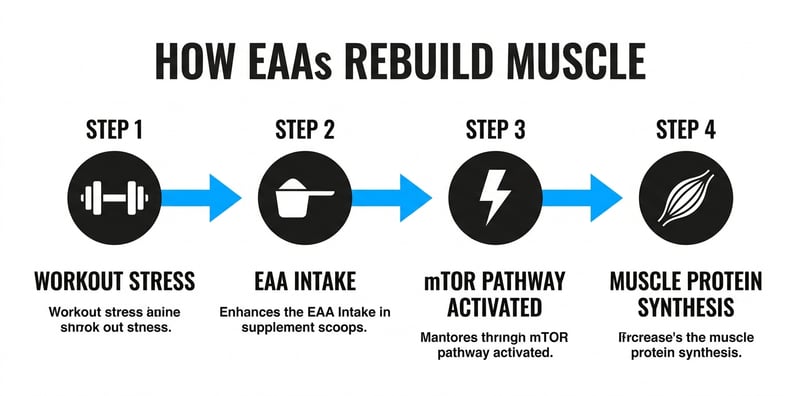
Research indicates that EAAs are more effective than BCAAs on their own for stimulating muscle protein synthesis. The reason: leucine is the primary trigger for the process through the mTOR pathway, but the body requires the other eight EAAs as raw materials to actually build muscle protein. Taking BCAAs without the rest is like hitting the start button on a machine that doesn't have all its parts. EAA supplements provide the complete set.
The Best Time to Take EAAs for Your Goals
The most effective approach to EAA timing is to keep them close to your training session. Here's how each window breaks down in practice.
Pre-workout (30 minutes before): Taking EAAs before training elevates circulating amino acid levels before muscle breakdown begins. This means your body has the building blocks it needs before it starts demanding them, which can reduce fatigue and begin priming muscle protein synthesis ahead of the session.
Intra-workout (during training): EAAs mixed in water work well as a sipping drink during longer or higher-intensity sessions. They help maintain energy output and reduce muscle catabolism in real time, particularly useful during resistance training or endurance work that runs past 60 minutes.
Post-workout (immediately after): This is the most widely researched window. After training, muscle fibers are damaged and the body is primed to absorb nutrients for repair. EAAs taken post-workout accelerate that repair process, support muscle growth, and can reduce the severity of DOMS in the days that follow.
Rest days and between meals: EAAs aren't only useful on training days. Taking them between meals on rest days helps maintain a positive amino acid balance, supports ongoing muscle repair, and prevents the body from dipping into a catabolic state during longer gaps between protein-rich meals.
- Pre-workout: 30 minutes before training to prime muscle protein synthesis and reduce fatigue
- Intra-workout: Sip during session to limit muscle breakdown and sustain energy
- Post-workout: Immediately after training to accelerate muscle repair and reduce DOMS
- Rest days: Between meals to maintain amino acid balance and support recovery
EAA powders are low in calories and take less than a minute to mix. There's no reason timing has to be complicated.
Benefits of Taking EAA Supplements
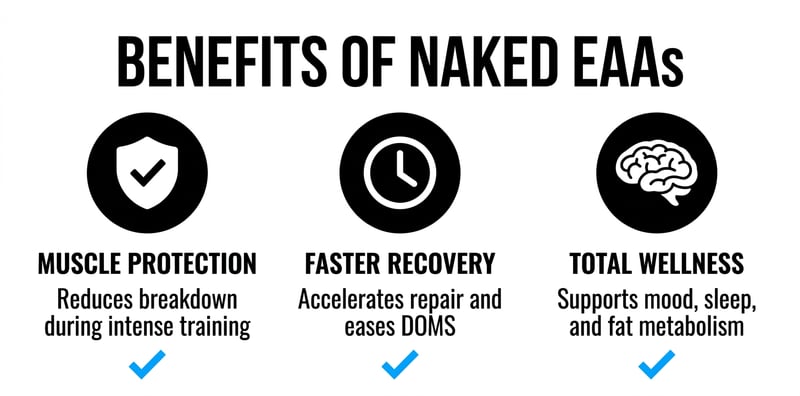
EAAs do more than build muscle. Here's what the research actually supports.
Muscle protein synthesis: Leucine is the key trigger for the mTOR signaling pathway, which initiates muscle protein synthesis. But all nine EAAs must be present for that synthesis to be completed. Research confirms that providing the full EAA profile after resistance exercise produces a stronger anabolic response than BCAAs alone. [1]
Reduced muscle catabolism: During calorie deficits or prolonged training sessions, the body breaks down muscle tissue for energy. EAAs supply the amino acids needed to prevent this, protecting the muscle you've already built while you're in a fat-loss phase or deep into a training block.
Improved exercise performance and reduced fatigue: EAAs provide muscles with direct fuel during training. Published research has shown this reduces fatigue and supports short-term active recovery during and between sets. [2]
Faster recovery and reduced DOMS: By delivering repair materials immediately post-workout, EAAs shorten the recovery window and reduce the muscle soreness that peaks 24 to 48 hours after training.
Fat metabolism support: When the body has adequate amino acids for protein synthesis, it's more likely to draw on fat stores for energy rather than breaking down muscle tissue. This supports a leaner body composition over time without sacrificing muscle mass.
Mood and sleep: Tryptophan, one of the nine EAAs, is a precursor to serotonin. Adequate serotonin levels are associated with better sleep quality and more stable mood. Low serotonin is linked to depression and anxiety. This is a genuinely underappreciated benefit of consistent EAA supplementation.
How Much EAA Should You Take?
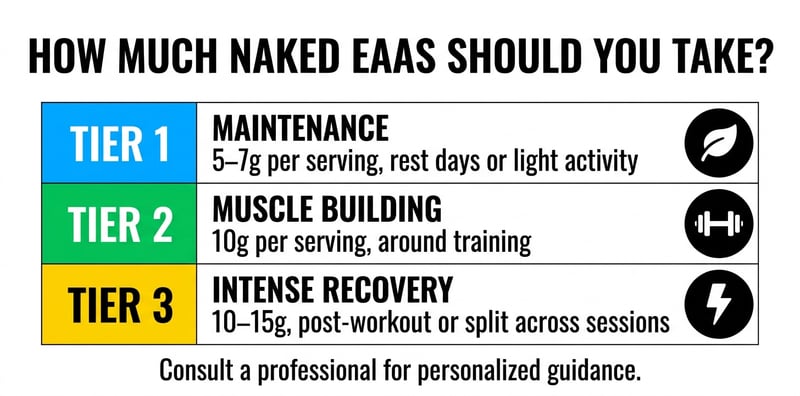
Most research on EAA supplementation uses doses in the range of 10 to 15 grams per serving. This appears to be the threshold at which measurable benefits to muscle protein synthesis and recovery are observed. Going below that range may reduce effectiveness. Going above it doesn't appear to cause harm, but the additional benefit plateaus for most people.
- General guideline: 10 to 15g per serving around training
- Higher body weight or training intensity: Lean toward the upper end of the range
- Endurance athletes: Consider intra-workout dosing for sessions over 60 minutes
- Rest days: A single serving between meals is sufficient to maintain amino acid balance
Body weight and training intensity both influence how much you need. A 200-pound athlete training twice a day has different amino acid demands than someone doing three sessions per week at moderate intensity. If you're in the former category, you may benefit from splitting your EAA intake across two windows, pre-workout and post-workout, rather than relying on a single dose.
EAAs are not a replacement for total daily protein intake. They work best as a targeted tool around training, not a substitute for consistent protein from whole foods and complete protein supplements. If your diet is already high in quality protein, your EAA needs are partially covered, and supplementation becomes about optimizing the timing and availability of amino acids rather than filling a large nutritional gap.
For most people, getting the timing right matters more than obsessing over the exact dose. A 10g serving taken consistently around training will outperform a 20g serving taken at a random time of day.
Who Should Take EAA Supplements?
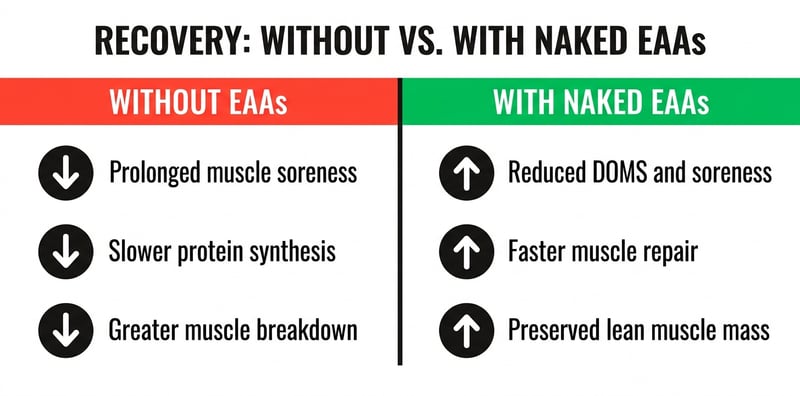
EAAs aren't only for elite athletes. There's a wide range of people who can benefit from consistent supplementation, and the reasons vary.
- Strength and resistance athletes: If maximizing muscle growth and speeding up recovery between sessions is the goal, EAAs provide the complete amino acid profile to support both.
- Endurance athletes: Long training sessions create sustained muscle breakdown. Sipping EAAs intra-workout helps limit catabolism and maintain performance over extended efforts.
- People on calorie-restricted diets: When calories are cut, protein intake often drops with them. EAAs protect muscle mass during a deficit without adding significant calories to your daily count.
- Vegans and vegetarians: Plant-based diets can be low in certain EAAs, particularly leucine, lysine, and methionine. Supplementing fills these gaps without requiring animal protein sources.
- Older adults: Muscle protein synthesis becomes less efficient with age, a condition that contributes to sarcopenia, the gradual loss of muscle mass. EAA supplementation, particularly leucine-rich formulas, has been studied as a tool to counteract this decline.
- Current BCAA users: If you're already using BCAAs and seeing results, switching to a full EAA supplement gives your body the remaining six essential amino acids it needs to complete the job BCAAs start.
- People who struggle to hit protein targets through food: Not everyone can eat enough chicken, eggs, or legumes to meet training demands. EAAs offer a convenient, low-calorie way to bridge that gap.
If you fall into any of these categories and you're not already using EAAs, it's worth running the experiment for four to six weeks alongside consistent training. The evidence is strong enough to warrant trying it.
Why Choose Naked Nutrition EAA Supplements?
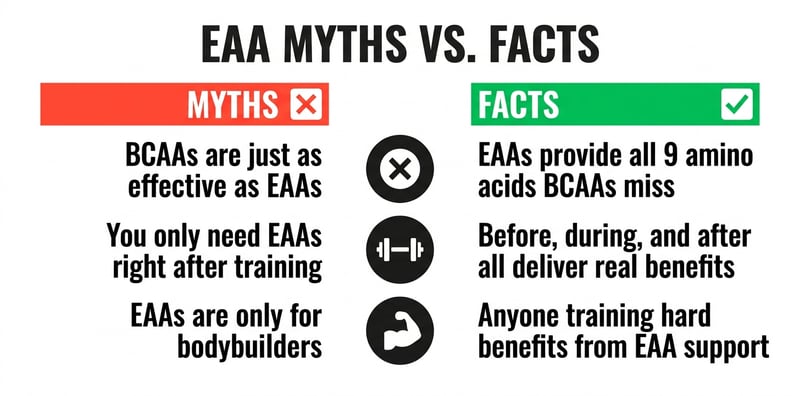
Not all EAA supplements are the same. The formula matters, and so does what's not in it.
Naked Nutrition's EAA supplement delivers a complete profile of all nine essential amino acids, including an effective leucine dose to drive muscle protein synthesis through the mTOR pathway. The formula is built around the same clean ingredient standard that runs across the entire Naked Nutrition product line: no artificial flavors, no artificial colors, no artificial sweeteners, and no unnecessary fillers.
Sourcing transparency is a core part of what Naked Nutrition does differently. You get clear information about what's in the product and why, not a proprietary blend designed to obscure underdosed ingredients.
The powder mixes cleanly with water, making it genuinely practical as a pre-workout, intra-workout drink , or post-training recovery supplement. For people who are sensitive to heavy, sweet protein supplements, or who train fasted and want something light, EAA powder is a practical alternative that delivers without the bulk.
If you're ready to move beyond BCAAs and give your body the full amino acid profile it needs to build and recover, Naked EAAs are available now. Clean ingredients, complete formula, no compromise.
Frequently Asked Questions
When is the best time to take EAAs?
The most effective window is around your training session. Taking EAAs 15 to 30 minutes before or during exercise keeps amino acid availability high when your muscles need it most, and post-workout dosing within 60 minutes supports muscle protein synthesis during the recovery window. Either approach works; combining pre- and intra-workout timing is often the most practical strategy for people training at high intensity.
Can you take EAAs on rest days?
Yes, and it's worth doing. Muscle protein synthesis doesn't stop on rest days; your body is actively repairing tissue from your last session. Taking EAAs between meals on rest days helps maintain a positive nitrogen balance and supports recovery without adding unnecessary calories.
How are EAAs different from BCAAs?
BCAAs are three of the nine essential amino acids: leucine, isoleucine, and valine. EAAs include all nine, which means your body has everything it needs to complete muscle protein synthesis rather than just stimulate it. Research by Wolfe (2017, Journal of the International Society of Sports Nutrition) confirmed that EAAs drive a more complete anabolic response than BCAAs alone.
How much should you take per serving?
A clinically relevant dose falls between 10 and 15 grams of EAAs per serving. Look for a formula with at least 2 to 3 grams of leucine specifically, since leucine is the primary trigger for muscle protein synthesis. Going lower than 10 grams per serving reduces efficacy, especially in a fasted state or after a hard training session.
Are EAAs safe to take every day?
EAAs are among the best-tolerated supplements available. They're the same amino acids found in whole protein foods; you're just delivering them in free-form, which accelerates absorption. Daily use at recommended doses poses no known health risks for healthy adults, and there's no evidence of toxicity at standard supplemental amounts.
Should you take EAAs with food or on an empty stomach?
Taking EAAs on an empty stomach or between meals gives you the fastest absorption rate, since there's no competing protein or fat to slow gastric emptying. That said, if your goal is simply maintaining amino acid availability throughout the day, taking them with a light meal is fine. Timing relative to training matters more than whether your stomach is empty.
Do EAAs have calories that could affect a cut or a fast?
A standard 10 to 15 gram serving of EAAs delivers roughly 40 to 60 calories, far fewer than a full protein shake. For most people in a caloric deficit, this is a worthwhile trade-off since EAAs help preserve lean muscle during a cut. If you're doing strict intermittent fasting and want to maintain a technically fasted state, be aware that EAAs do trigger an insulin response.
Does Naked Nutrition's EAA supplement have any certifications?
Naked Nutrition EAAs are third-party tested and free from artificial sweeteners, colors, and flavors. The brand follows current Good Manufacturing Practices (cGMP), meaning every batch is produced under verified quality controls. If you're a drug-tested athlete, look for products carrying NSF Certified for Sport or Informed Sport certification for the highest level of assurance.
Top Post-Workout Recovery Picks
Chosen by 1 million+ customers. Free shipping on orders over $100.
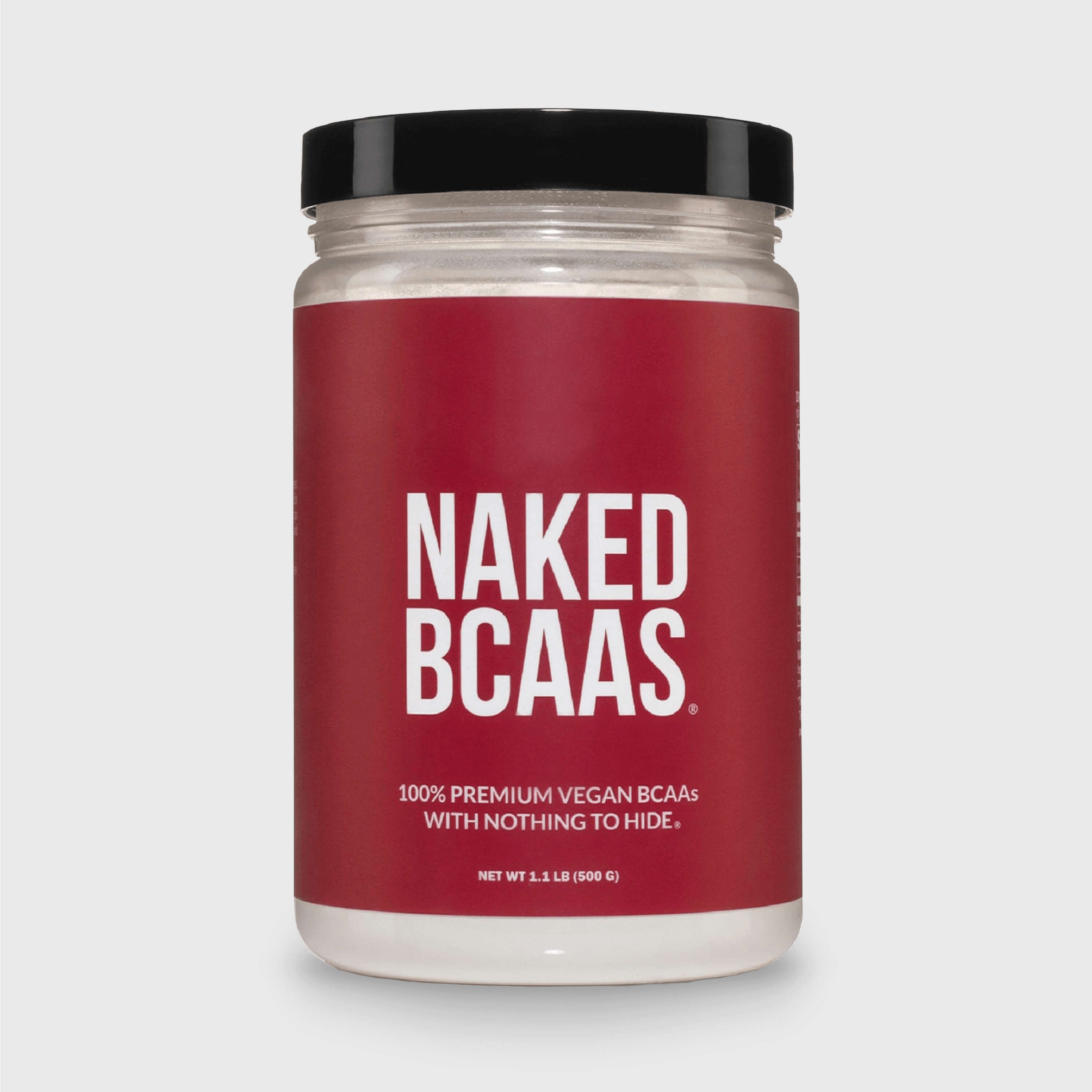
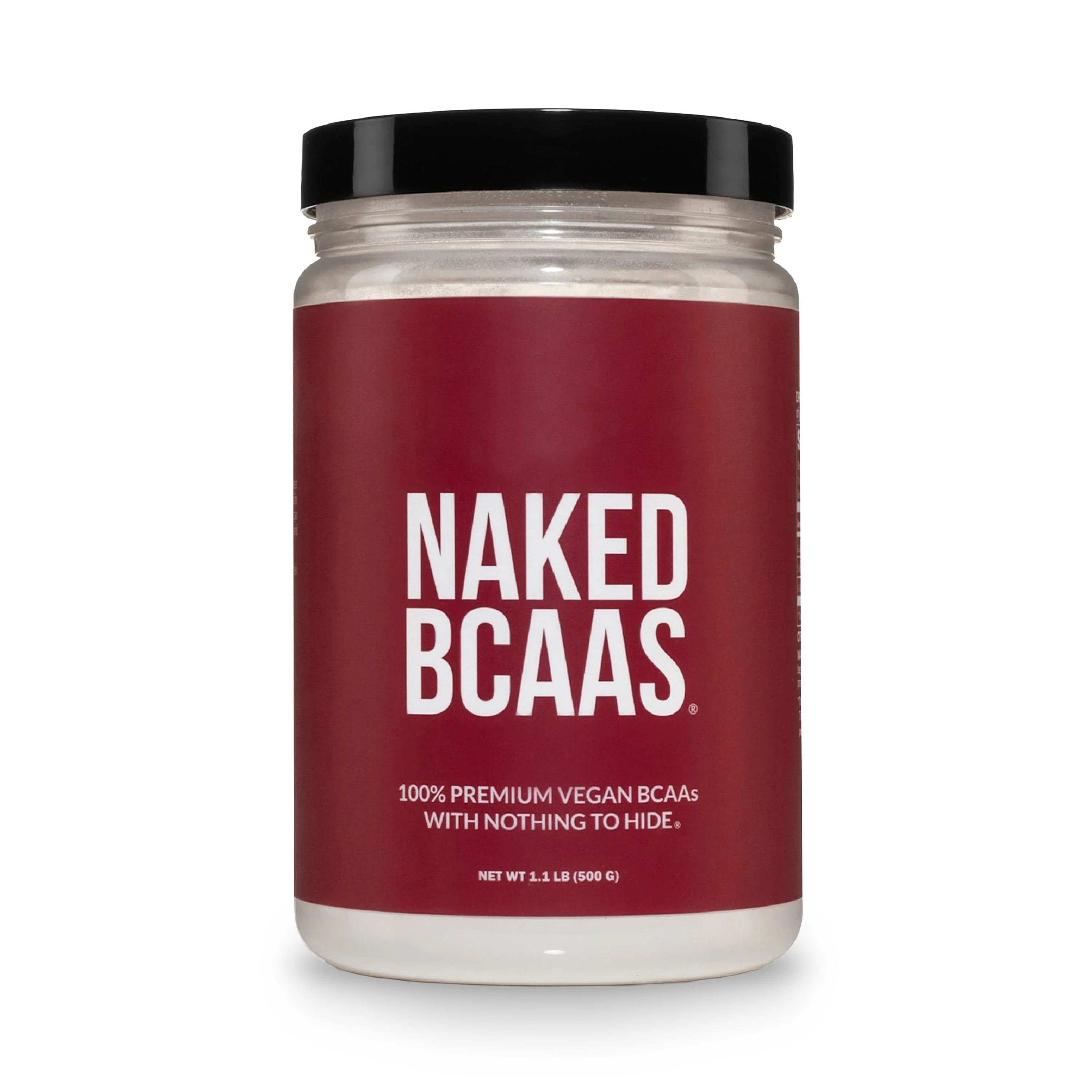
Branched Chain Amino Acids | Naked BCAAs - 100 Servings
$34.99
- ✓ BCAA Formula
- ✓ Creatine Monohydrate
- ✓ Creatine Formula
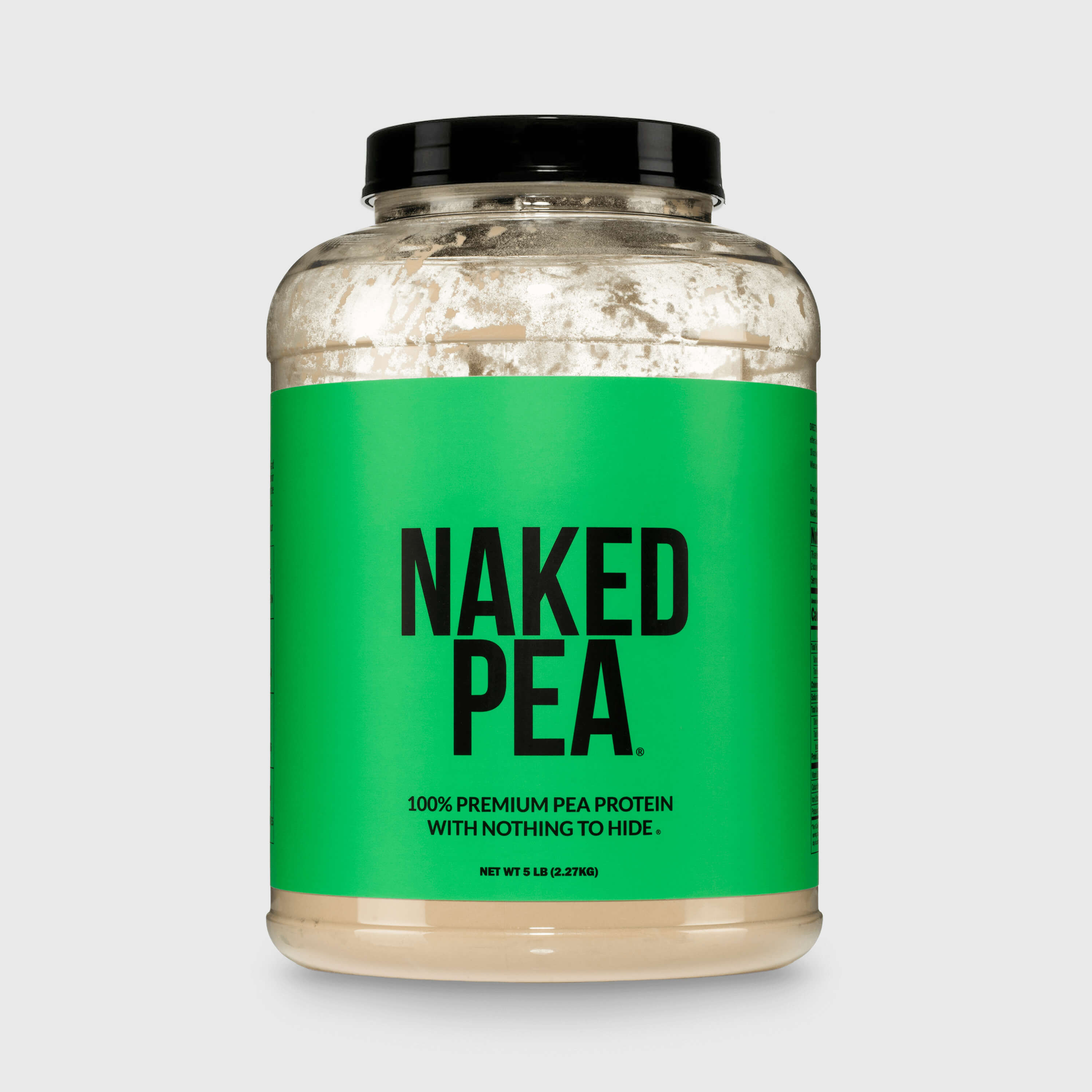
Pea Protein Powder | Naked Pea - 5LB
$57.99
- ✓ Sustainable Farming Practices
- ✓ Superior Amino Acid Profile
- ✓ Promote Muscle Gain
- ✓ Lose Weight
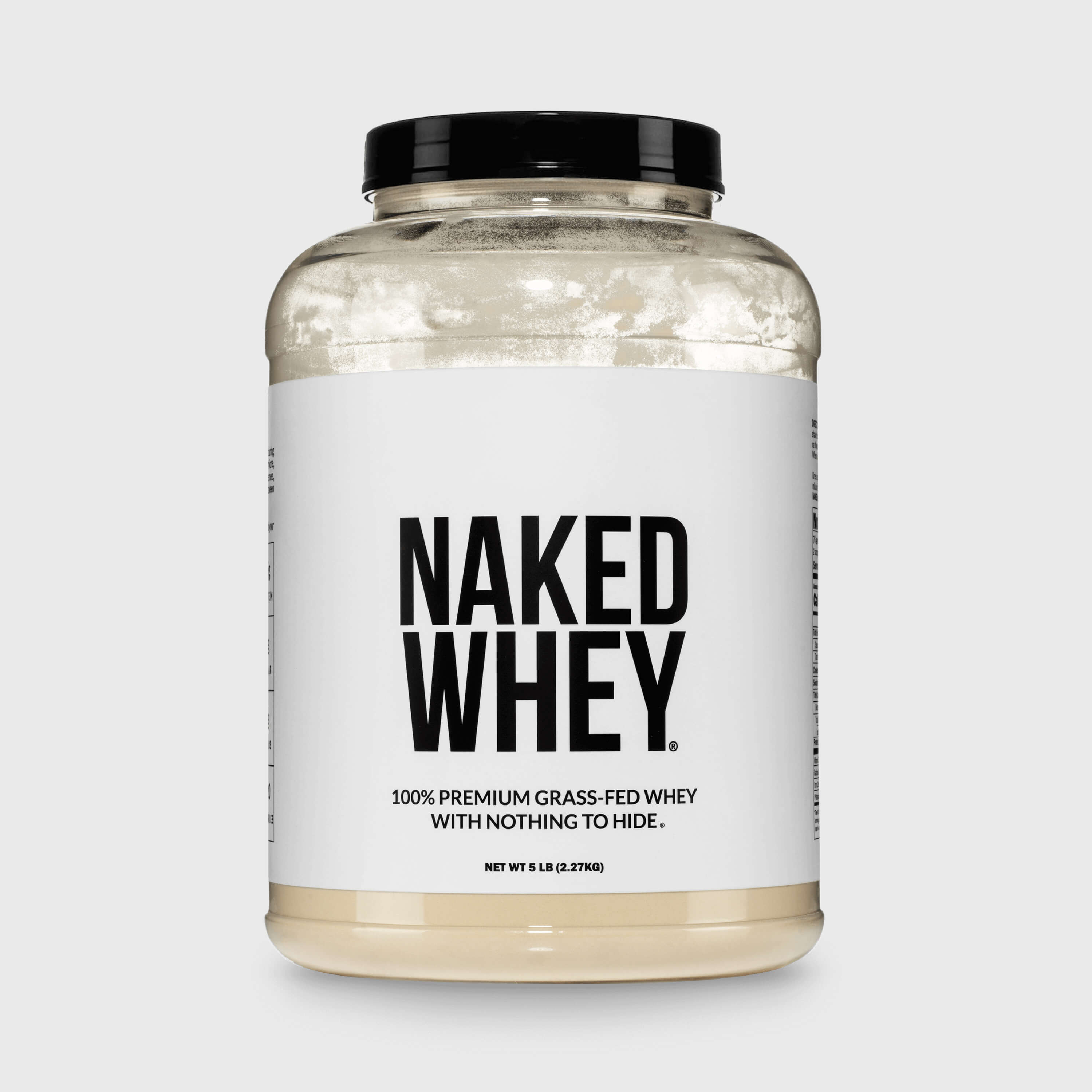
Grass Fed Whey Protein Powder | Naked Whey - 5LB
$139.99
- ✓ Build and Maintain Lean Muscle Mass
- ✓ Boost Immune System
- ✓ Lose Fat
- ✓ Improve Heart Health