


Key Takeaways
- Stalled progress is diagnosable: Almost every plateau comes down to one or two weak links in training, nutrition, recovery, or programming — not everything at once.
- Progressive overload is non-negotiable: If your workouts look the same month after month, your body has no reason to change.
- Protein targets matter: Aim for 0.7 to 1 gram per pound of bodyweight daily — most people who aren't building muscle are under-eating protein, not under-training.
- Sleep is a performance variable: Seven to nine hours of quality sleep drives muscle repair, hormone production, and next-session performance.
- Realistic timelines prevent quitting too early: Beginners can gain 1 to 2 pounds of muscle per month in ideal conditions; intermediate lifters gain far less.
- Find your bottleneck first: Identify the single biggest constraint, fix it for four to six weeks, then reassess before changing anything else.
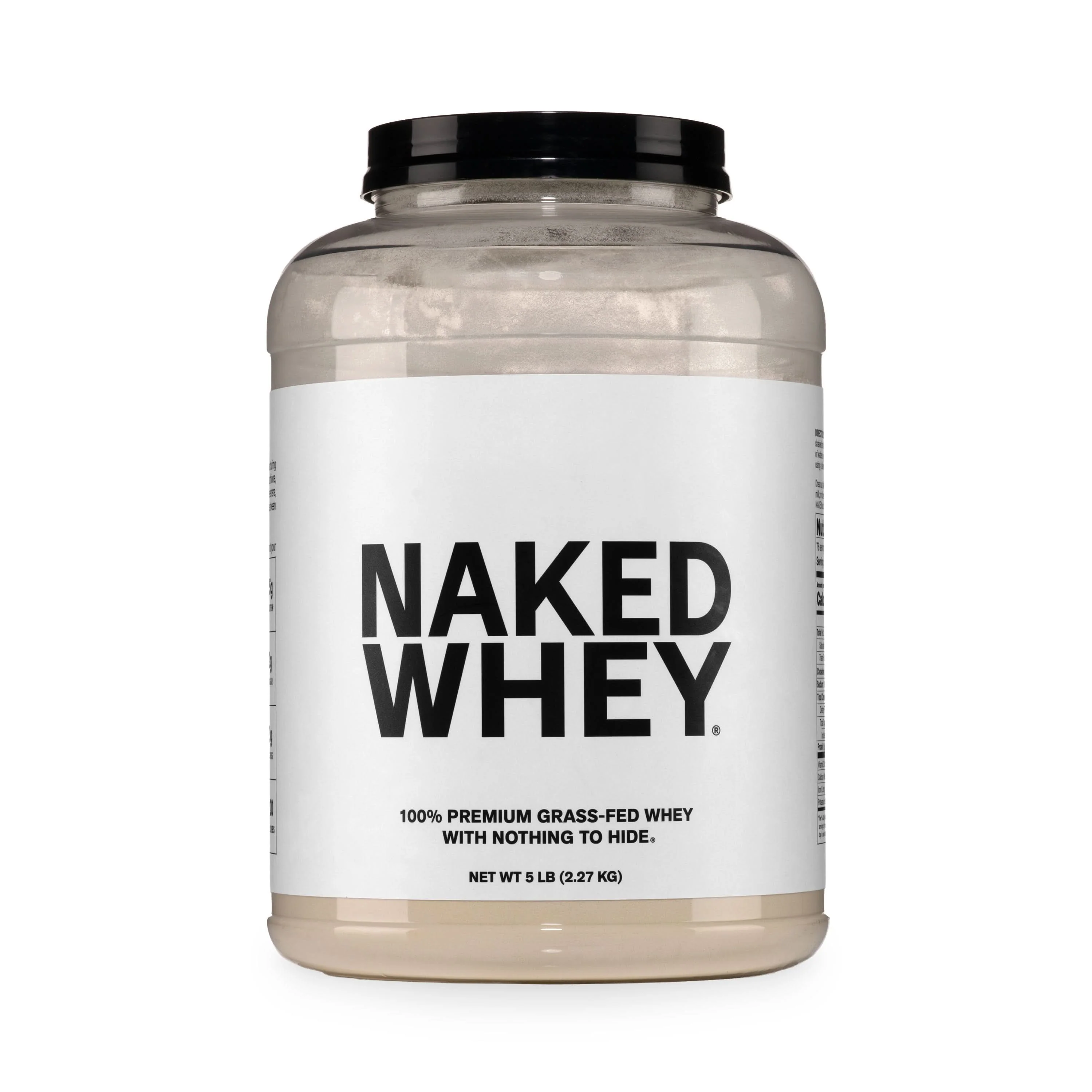
Grass Fed Whey Protein Powder | Naked Whey - 5LB
- Build and Maintain Lean Muscle Mass
- Boost Immune System
- Lose Fat
- Improve Heart Health
Why You're Not Making Progress at the Gym
You're showing up. You're putting in the work. But the results aren't coming — and that gap between effort and outcome is one of the most frustrating places to be in fitness. If you're searching for reasons you're not making progress at the gym, here's the honest answer: stalled progress is almost always diagnosable, and it's almost always fixable.
The challenge isn't that something mysterious is wrong with you. It's that there are several possible causes, and people tend to either guess randomly or try to fix everything at once. Both approaches waste time. What works is identifying your specific bottleneck and addressing it directly.
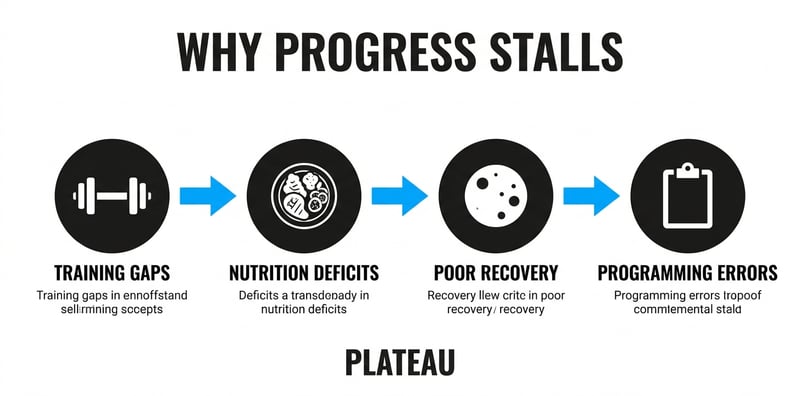
Progress breaks down across four main categories: training, nutrition, recovery, and programming. Each category contains specific, common mistakes that quietly undercut results. This article covers all of them, then gives you a self-diagnostic framework at the end so you can pinpoint which category is holding you back right now.
One important framing note before you start: progress looks different depending on your goal. Getting stronger, building muscle, and losing fat are all valid targets, but they have different metrics. "No progress" in a mirror doesn't mean no progress on the bar, and vice versa. Know what you're measuring before you conclude something isn't working.
Training Reasons You're Not Making Progress at the Gym
Training is the most visible part of the process, so it makes sense to look here first. But if the problem is your training, it's rarely that you're simply not working hard enough. It's usually about how you're applying that effort.
- No progressive overload: Same weights, same reps, same sets — month after month.
- Training too hard, too often: No deload weeks, every set to failure, accumulated fatigue masking adaptation.
- Inconsistency: Sporadic attendance and frequent program restarts erase the cumulative effect of training.
- Poor technique or exercise selection: Tension going to the wrong muscles means a weaker growth signal.
- Insufficient intensity or volume: Workouts that are comfortable throughout will not drive meaningful change.
The biggest training error is failing to apply progressive overload. Research confirms that muscle and strength adaptations only occur when training stimulus increases over time. That doesn't mean adding weight every single session — but something has to move forward each week. Practical ways to apply this include adding one rep to your working sets before increasing weight, adding a fourth set to a key lift, or reducing rest periods progressively. Beginners adapt quickly and can often add weight weekly; intermediate lifters may need to cycle volume and intensity across months to keep progressing.
On the volume side, research supports a minimum effective dose of around 10 to 20 working sets per muscle group per week for hypertrophy, with intensity staying close enough to failure that the last two to three reps of each set are genuinely challenging. Comfortable workouts produce comfortable results. If you finish sessions feeling like you had plenty left in the tank, the stimulus is likely too low to force adaptation.
Technique matters not because it looks clean but because it determines where tension lands. When you shorten range of motion or use momentum, tension shifts away from the target muscle, and the growth signal weakens. Over months, that adds up to disappointing results despite genuine effort.
Nutrition Reasons You're Not Seeing Results
Training is the obvious place to look when progress stalls, but nutrition is the most underestimated. You can train smart and train consistently — if your nutrition isn't supporting your goal, progress slows or stops. Three mistakes account for the majority of nutrition-related plateaus.
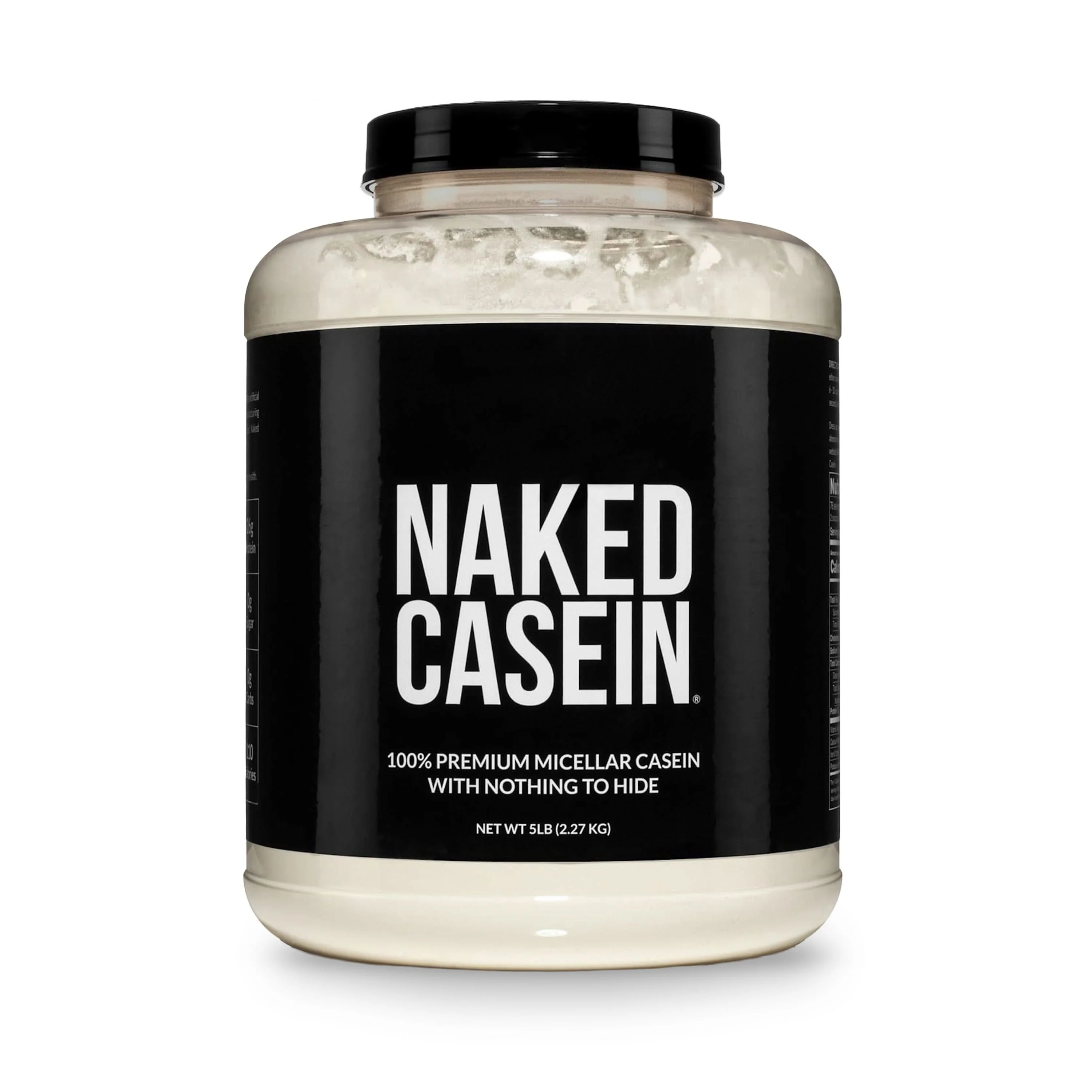
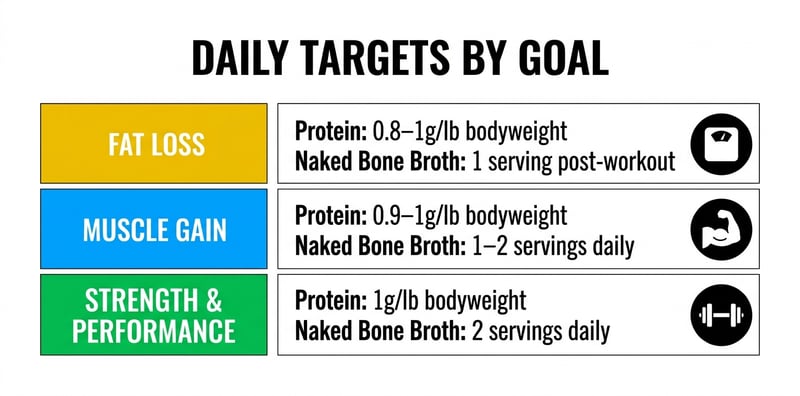
Eating too few calories. Muscle growth, strength, and recovery all require energy. If you're eating at or below maintenance, your body doesn't have the resources to adapt to training. You'll still feel sore and tired, but strength stalls and muscle growth halts. If your goal is to build muscle and your body weight hasn't moved in months, under-eating is the most likely cause.Not eating enough protein. Protein provides the raw materials for muscle repair and growth. The research-backed target is 0.7 to 1 gram of protein per pound of bodyweight per day — for a 180-pound person, that's 126 to 180 grams daily. Most people significantly overestimate how much protein a typical meal contains. A chicken breast with dinner isn't the same as a consistent daily intake that meaningfully stimulates muscle protein synthesis. If hitting that target through whole food alone feels difficult, protein powder is a straightforward solution. Naked Whey provides a clean, high-quality source post-training, while Naked Casein works well before sleep to sustain overnight muscle repair.
Inconsistent or poorly timed nutrition. Meal timing doesn't need to be obsessive, but the basics matter. Eating something containing protein and carbohydrates one to two hours before training supports performance. Getting protein in within a few hours post-training supports recovery. Skipping meals or going long stretches without food leads to low energy, reduced training output, and slower recovery. One scenario worth understanding here is body recomposition: if you're eating at maintenance, you can simultaneously build some muscle and lose some fat, meaning scale weight stays flat while your composition actually improves. "No progress" on the scale doesn't always mean no progress.
📊 What Research Says
A review published in Nutrients (2021) confirms that achieving a minimum effective training volume — combined with adequate protein intake — is a prerequisite for hypertrophy. Neither variable alone is sufficient. Protein without adequate training stimulus doesn't build muscle; training without adequate protein can't repair it.
Recovery and Lifestyle Factors Holding You Back
This is the category most people overlook, and often the one that makes the biggest difference once it's addressed. You can train well and eat well, but if recovery and lifestyle factors aren't supporting those efforts, you won't see the progress your work deserves.
Sleep. Sleep is one of the strongest predictors of performance, recovery, and body composition. The recommendation is seven to nine hours per night — and quality matters as much as quantity. During deep sleep, growth hormone is released, testosterone levels are restored, and muscle tissue is repaired. When sleep is consistently cut short, strength drops, motivation falls, and workouts feel harder without producing better results. Training hard on five to six hours of sleep per night is like trying to build a house on a crumbling foundation.
Life stress. Work pressure, financial strain, relationship friction, poor sleep hygiene — all of it adds to your total stress load. High background stress elevates cortisol, which competes directly with the hormonal environment needed for muscle growth and recovery. This often shows up as stalled progress despite "doing everything right." During genuinely high-stress periods, reducing training volume temporarily is smarter than pushing through and compounding the problem. Practical tools for stress management include structured breathwork, shorter but more focused training sessions, and protecting sleep above everything else.
Recovery outside the gym. Recovery isn't just rest days. Here are specific practices that support between-session recovery:
- Daily walking to promote circulation without adding training stress
- Foam rolling and stretching to manage soreness and maintain mobility
- Sauna or contrast showers to support muscle recovery
- Adequate hydration — even mild dehydration of 2 percent body mass impairs both strength output and cognitive function, meaning every session runs below capacity
None of these are complicated. The point is to stop treating the hours outside the gym as irrelevant to your results.
Programming and Mindset Mistakes That Stall Progress
These mistakes are the hardest to spot because they don't feel like mistakes. They feel like effort and variety and staying motivated.
Constantly changing programs. Strength and muscle growth rely on repeated exposure to the same movements over time. Program hopping — switching exercises, splits, or entire plans every few weeks — prevents the nervous system and muscles from accumulating the adaptations that come from sustained practice. A straightforward program followed consistently for three to six months will outperform a "perfect" program that gets abandoned after four weeks. Novelty isn't progress.
Unrealistic expectations. Progress in the gym is slower than social media makes it look — and far slower than enhanced athletes make it appear. Realistic benchmarks for natural lifters: beginners can gain roughly one to two pounds of muscle per month in optimal conditions; intermediate lifters gain significantly less, often half a pound per month or fewer. Strength gains follow a similar curve, progressing quickly at first then slowing as you approach your genetic ceiling. Comparing your timeline to filtered before-and-after photos or sponsored athletes leads to abandoning sound approaches that are actually working.
Not tracking anything. If you're not tracking your training, you're guessing. Without data — weights used, reps completed, body weight trends, performance markers — you can't tell whether you're progressing or just hoping you are. Tracking doesn't need to be complicated. A notebook, a basic app, or even weekly weigh-ins and logged lifts gives you enough information to make intelligent decisions. The format doesn't matter; the habit does. If you can't point to specific evidence that you've gotten stronger or leaner over the past two months, tracking is probably missing.
Supplements That Can Support Your Progress
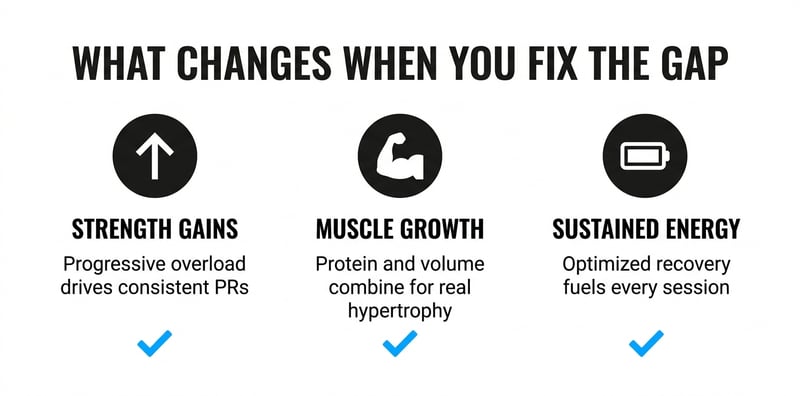
Supplements don't fix a broken training plan or a poor diet. But once the fundamentals covered above are in place, a few well-researched options can genuinely support your progress. These are tools, not shortcuts.
Protein powder. The simplest use case in sports nutrition. If you're struggling to hit 0.7 to 1 gram of protein per pound of bodyweight through whole food alone, a quality protein supplement closes the gap efficiently. Naked Whey is a clean, single-ingredient whey option for post-training. Naked Casein digests slowly and is well-suited to pre-sleep use when overnight muscle repair is the priority.
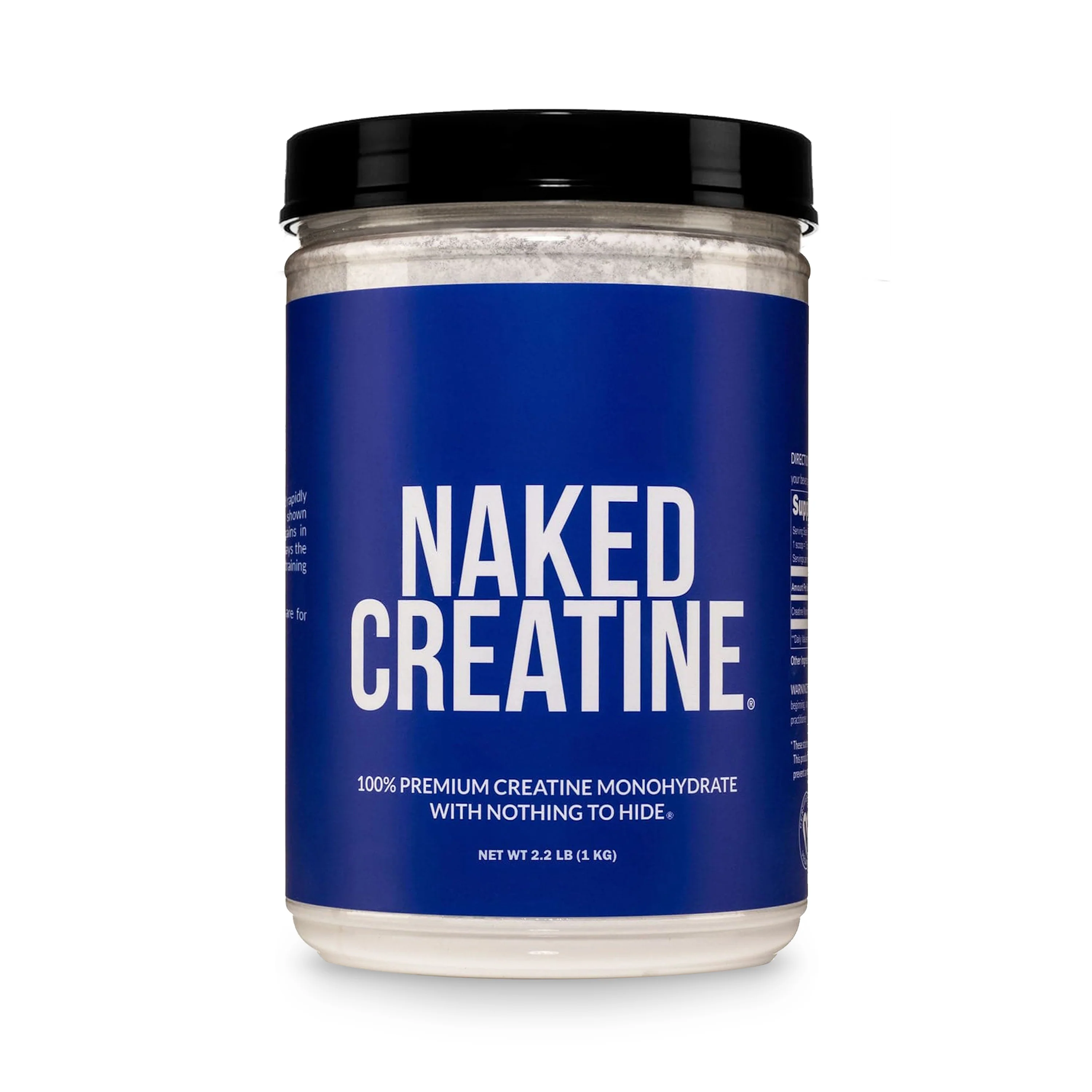
Creatine. Creatine monohydrate is the most researched supplement in exercise science. It increases phosphocreatine stores in muscle, which directly supports strength output and training volume — both drivers of muscle growth over time. The standard dose is three to five grams daily. Naked Creatine is unflavored, third-party tested, and free from unnecessary additives.
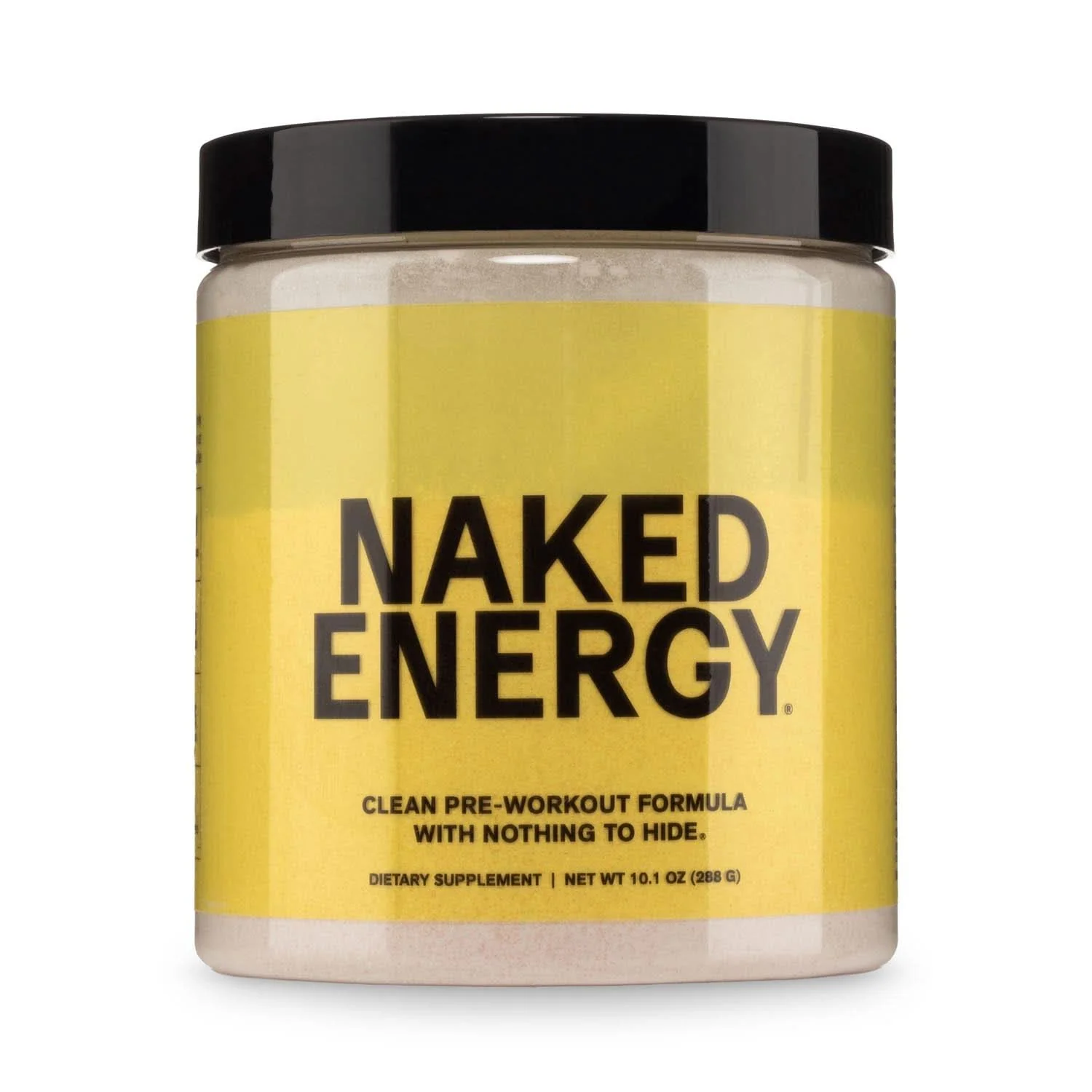
Pre-workout. On days when energy is low but training intensity matters, a clean pre-workout can support focus and output. Naked Energy uses straightforward, transparent ingredients without artificial dyes or proprietary blends. Use it as a performance tool on hard sessions, not as a replacement for adequate sleep and nutrition.
The priority order remains: consistency in training and nutrition first, recovery second, then supplements as a supporting layer. Getting this backward is a common and expensive mistake.
How to Find Your Personal Progress Bottleneck
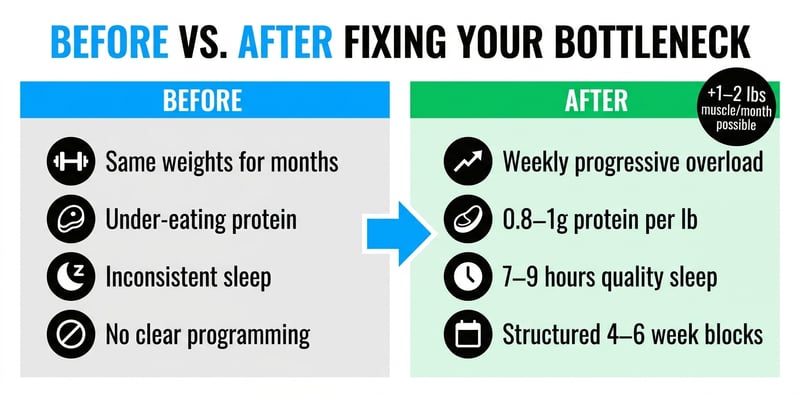
Stalled progress is almost never caused by everything being wrong simultaneously. It's almost always one or two weak links quietly holding back results. The mistake is trying to fix everything at once. Instead, identify your primary bottleneck, fix that first, and give it time to work.
Start by working through these five honest questions:
1. Are your workouts actually progressing over time? Compare what you're lifting and doing now versus two to three months ago. If the numbers haven't moved meaningfully, training structure — specifically progressive overload — is the issue.
2. Are you recovering well between sessions? If performance is declining session to session, soreness never fades, or your motivation to train has dropped, recovery and stress management need attention before training volume does.
3. Is your body weight trending in the right direction? Trying to build muscle and your weight hasn't moved in months? You're likely under-fueled. Trying to lose fat and weight isn't dropping? Your intake is probably higher than you think. Remember that body recomposition can mask both goals on the scale.
4. Are you consistent week to week? If you're restarting regularly, nothing else matters much. Simplify your program to something you'll actually stick to, and focus entirely on showing up before adding any complexity.
5. Are you tracking anything at all? If the answer is no, this is where to start. You can't diagnose a problem you're not measuring.
Once you've identified the most likely problem, apply this simple action framework: fix that one constraint, stay consistent with that fix for four to six weeks, then reassess. If progress resumes, you found your bottleneck. If not, move to the next most likely cause. Progress returns faster than most people expect once the primary limiter is removed. The priority order to work through: consistency first, then nutrition, then sleep and recovery, then training details.
Most people don't need a new program, a new gym, or more motivation. They need clarity on what's actually limiting them — and the patience to fix one thing at a time.
Frequently Asked Questions
How long does it realistically take to see progress in the gym?
Most beginners see measurable strength gains within 4 to 6 weeks and visible body composition changes within 8 to 12 weeks, provided training and nutrition are consistent. If you're past that window and still seeing nothing, the program isn't the problem — the execution is. Track your lifts, your calories, and your sleep before assuming you need a new routine.
Is not eating enough protein really a major reason people stall in the gym?
Yes, and it's one of the most common culprits. Research published in the Journal of the International Society of Sports Nutrition recommends 1.6 to 2.2 grams of protein per kilogram of bodyweight daily for people looking to build or maintain muscle. Most people who think they're eating enough protein are consistently landing well below that range when they actually track it.
Can you make progress going to the gym just three days a week?
Absolutely. Frequency matters less than progressive overload and recovery quality. Three well-structured sessions per week that consistently add volume or intensity over time will produce better results than five unfocused sessions with no clear progression plan.
How does poor sleep affect gym progress?
Sleep is when the majority of muscle repair and growth hormone secretion occurs, so cutting it short directly cuts your recovery. A 2011 study by Leproult and Van Cauter in JAMA found that just one week of sleeping five hours per night reduced testosterone levels in young men by 10 to 15 percent. Lower testosterone means slower muscle development, longer recovery times, and reduced training output.
What does progressive overload actually mean, and why do people get it wrong?
Progressive overload means systematically increasing the demand placed on your muscles over time — through more weight, more reps, more sets, or shorter rest periods. Most people get it wrong by lifting the same weights for the same reps week after week and calling it consistency. Your body adapts quickly; if you're not challenging it beyond what it already handles, there's no reason for it to change.
Is overtraining a real reason people stop making gym progress?
Overtraining is real, but it's far less common than under-recovering. Most people who think they're overtraining are actually under-sleeping, under-eating, or both. True overtraining syndrome requires months of excessive volume without adequate rest, and it comes with measurable performance declines, hormonal disruption, and persistent fatigue that doesn't resolve with a few days off.
Can stress outside the gym actually stop your progress?
It can, and this is one of the most underestimated factors in stalled progress. Chronic psychological stress elevates cortisol, which suppresses muscle protein synthesis and promotes fat retention, particularly around the midsection. If your training and nutrition are dialed in but life is consistently overwhelming, your body is operating in a state that actively works against muscle building.
Do you need supplements to make progress in the gym?
No. Whole food nutrition, consistent training, and adequate sleep will drive the vast majority of your results. That said, certain supplements like creatine monohydrate have substantial research backing — a meta-analysis by Lanhers et al. in the European Journal of Sport Science found creatine supplementation improved upper and lower body strength significantly compared to placebo. Supplements fill specific gaps; they don't replace the fundamentals.
Top Whey Protein Picks
Chosen by 1 million+ customers. Free shipping on orders over $100.
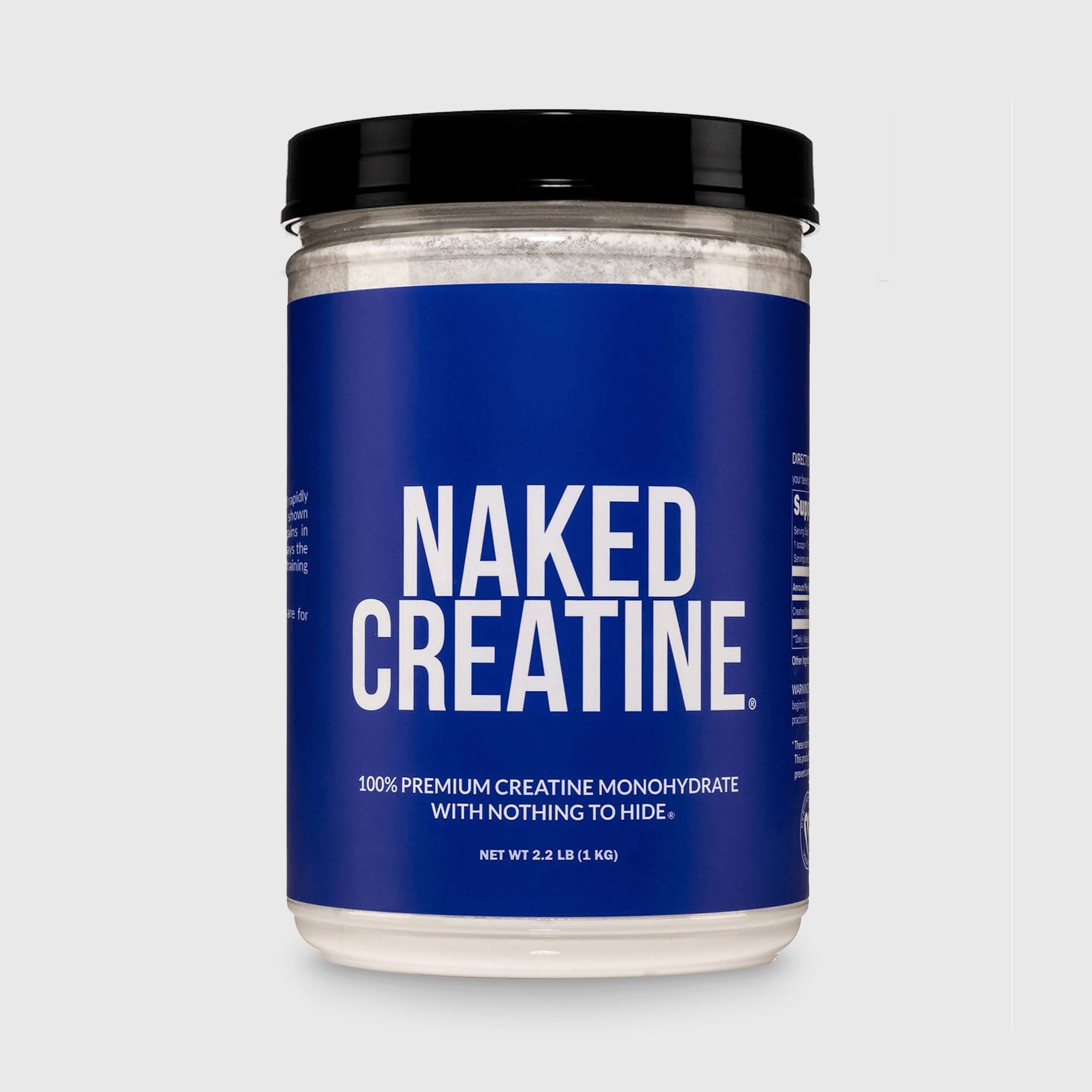
Creatine Monohydrate Powder | Naked Creatine - 2.2LB
$35.99
- ✓ 100% premium creatine monohydrate
- ✓ Highest grade available: fast dissolving and quickly absorbed
- ✓ 5g of creatine per serving
- ✓ No artificial sweeteners, flavors, or colors
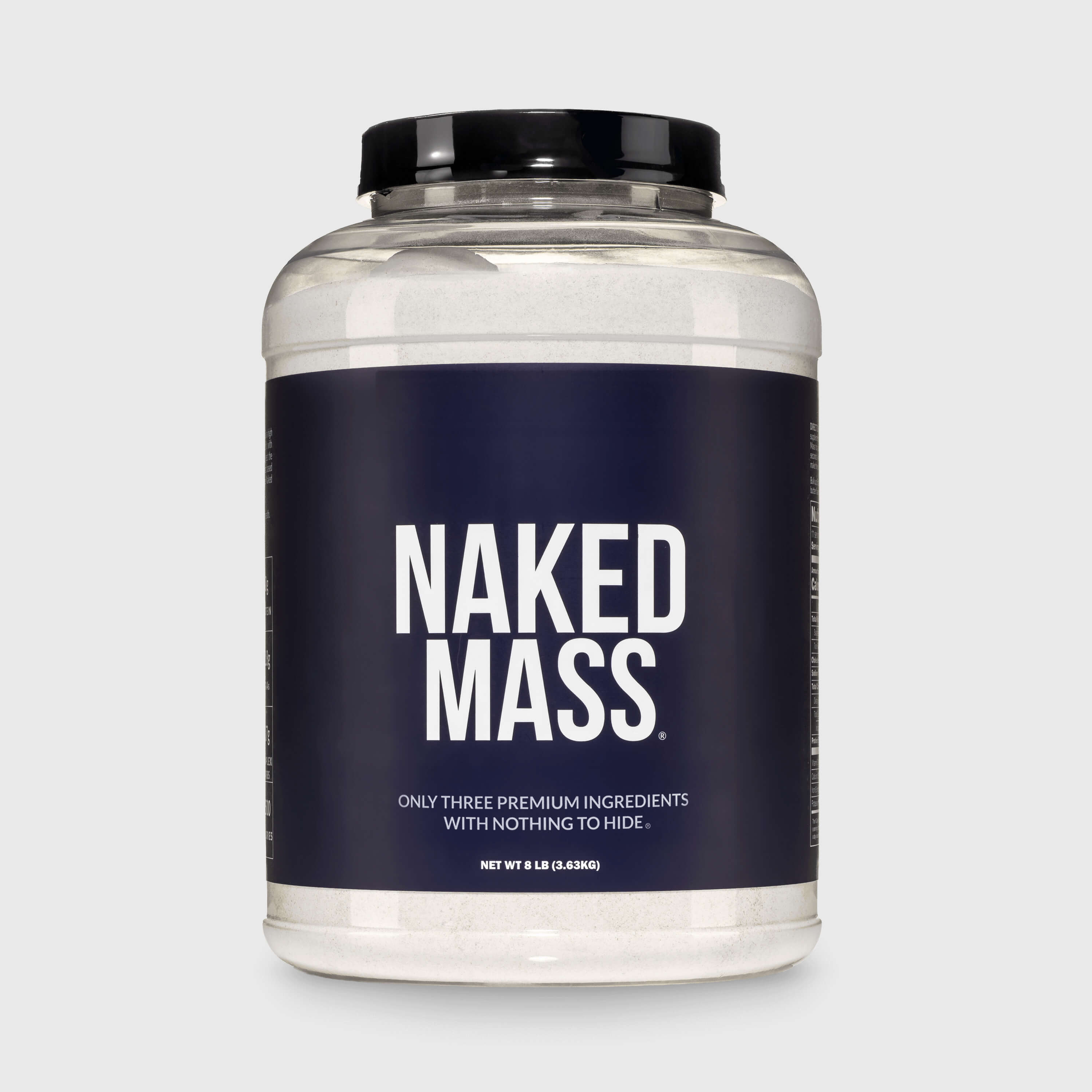
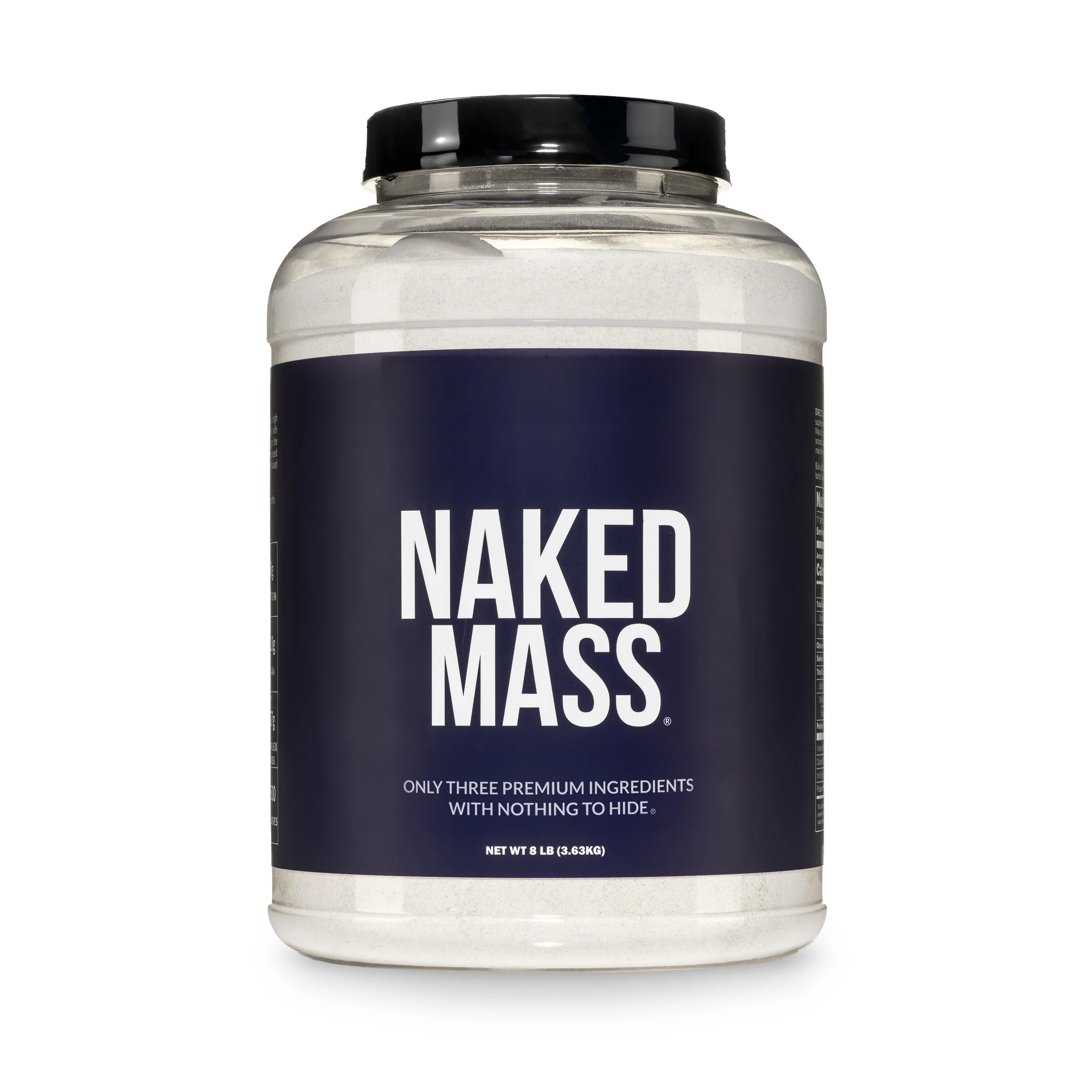
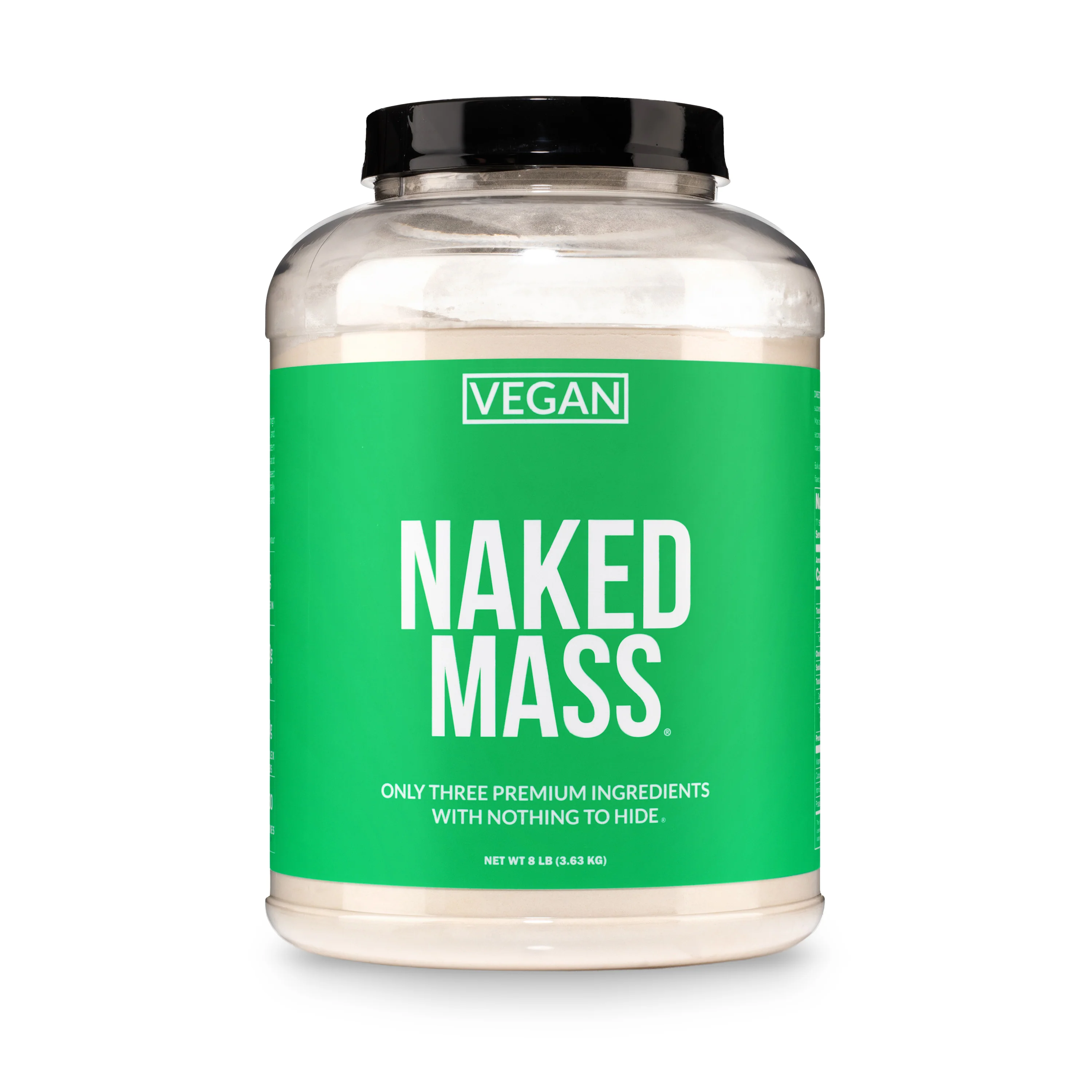
Mass Gainer Protein Supplement | Naked Mass - 8LB
$79.99
- ✓ Fuel Your Workouts
- ✓ Meet Daily Calorie Requirements to Gain Weight
- ✓ Build and Sustain Muscle Mass
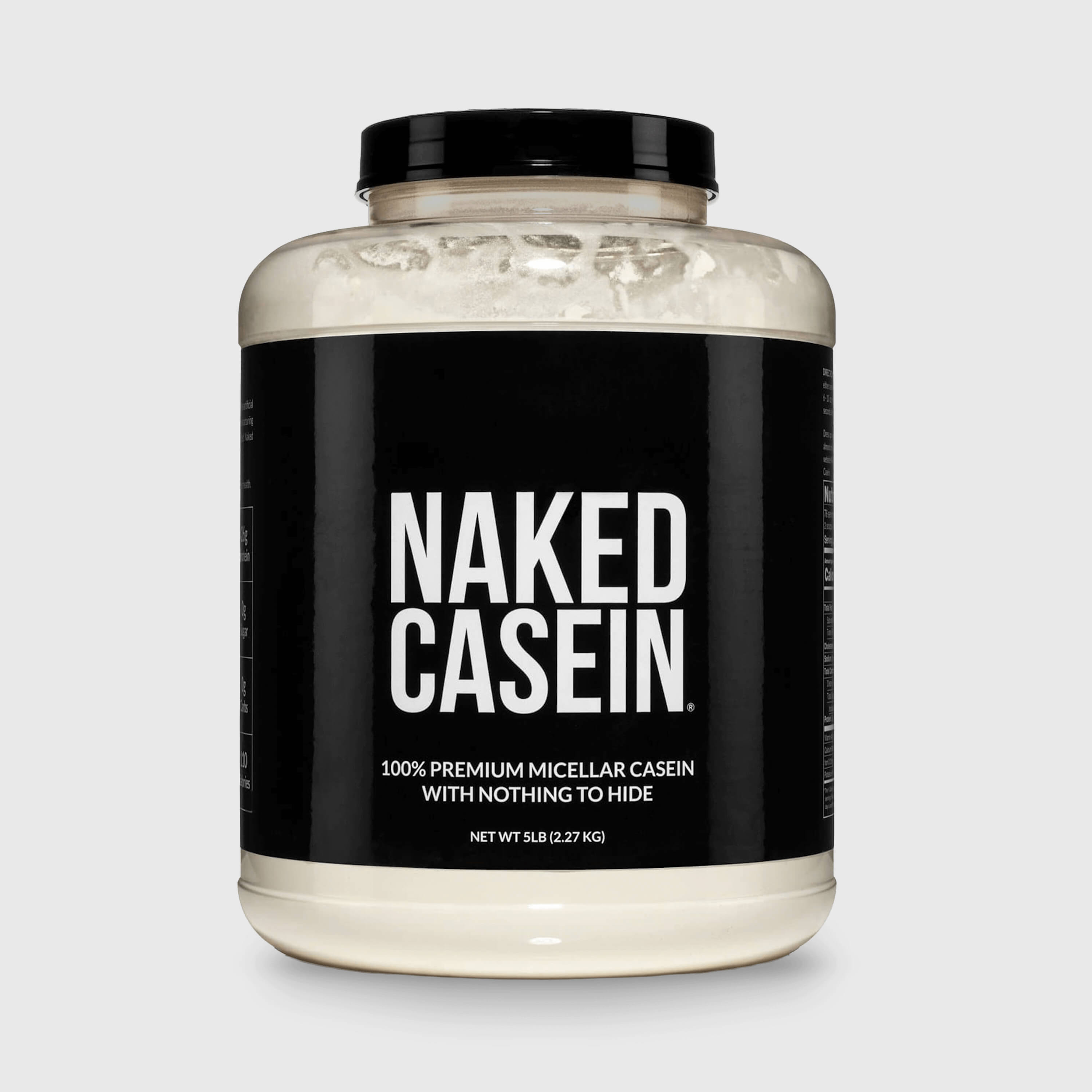
Micellar Casein Protein Powder | Naked Casein - 5lb
$109.99
- ✓ Why Micellar Casein Protein
- ✓ Promote Muscle Growth While You Sleep
- ✓ Improve Body Composition
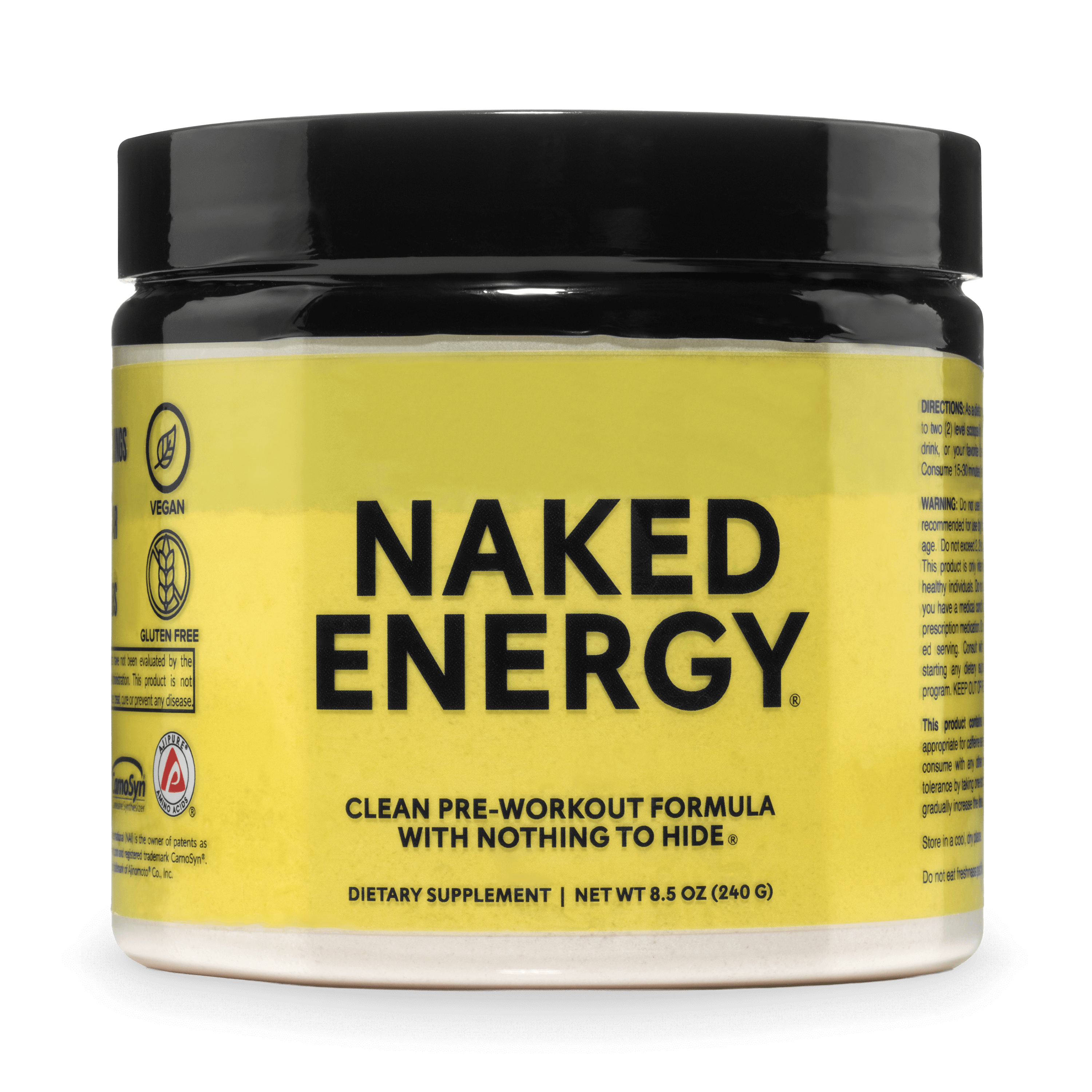
Pre Workout Supplement | Naked Energy - 50 Servings
$44.99
- ✓ Only premium, vegan ingredients
- ✓ Help boost energy, strength, power, and stamina
- ✓ 2g of CarnoSyn® Beta-Alanine
- ✓ 1g of Creatine