

Key Takeaways
- Egg White Substitute: Replace 1 cup of liquid egg whites with 1/2 cup egg white protein powder plus 1/2 cup warm water.
- Whole Egg Substitute: Use 1/4 cup powder per whole egg, or 3 tablespoons powder plus 1 tablespoon vegetable oil if you want to preserve fat content and texture.
- Flour Replacement: Swap up to 1/4 of the flour in any recipe with egg white protein powder to boost protein without wrecking texture.
- Baking Tip: Add extra liquid and a pinch of baking powder when using egg white protein powder as a flour substitute to prevent dryness and density.
- Clean Ingredient: Naked Egg White Protein Powder contains one ingredient: egg whites. No fillers, no artificial additives.
- Best Uses: High-protein pancakes, muffins, waffles, energy balls, and savory egg dishes all work well with egg white protein powder.
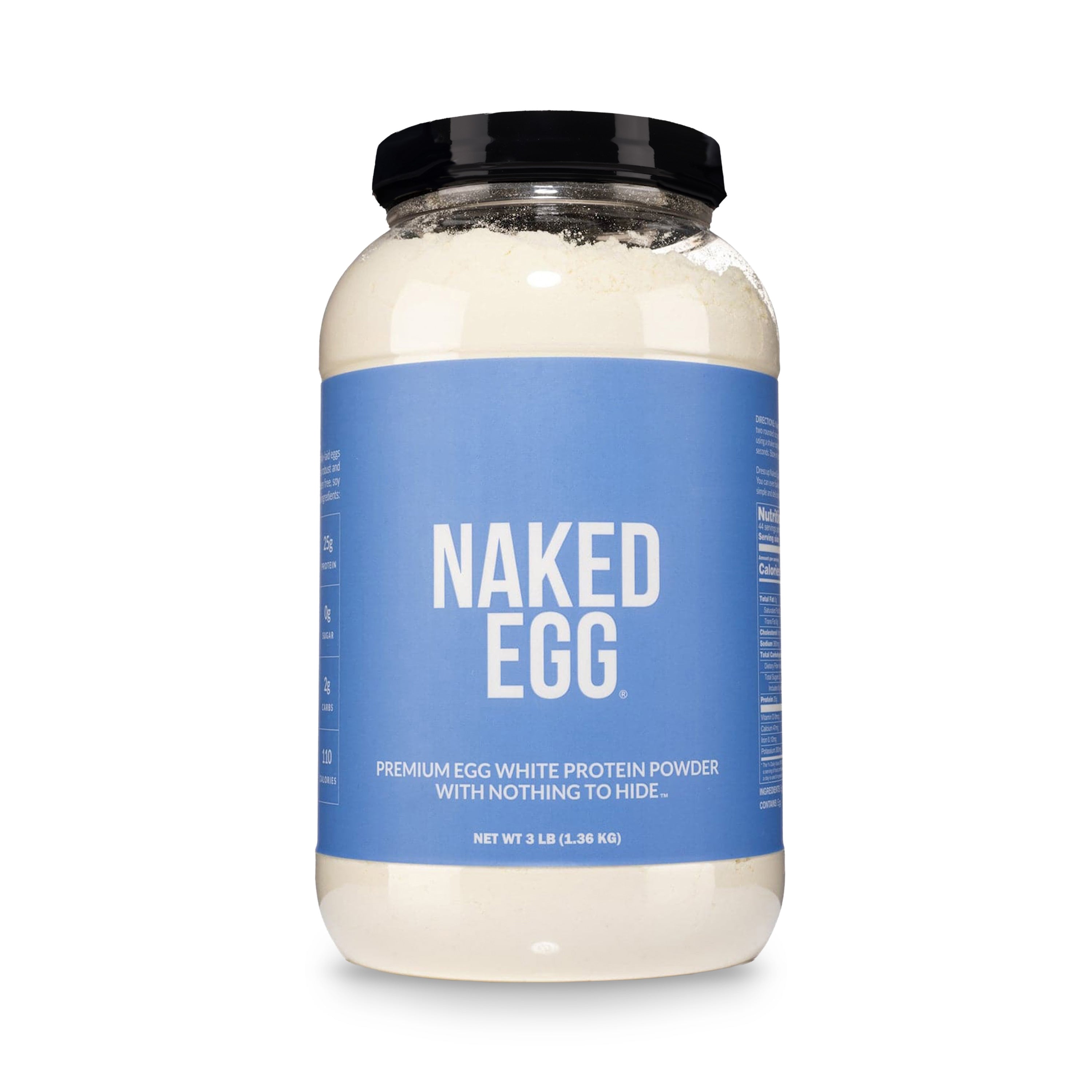
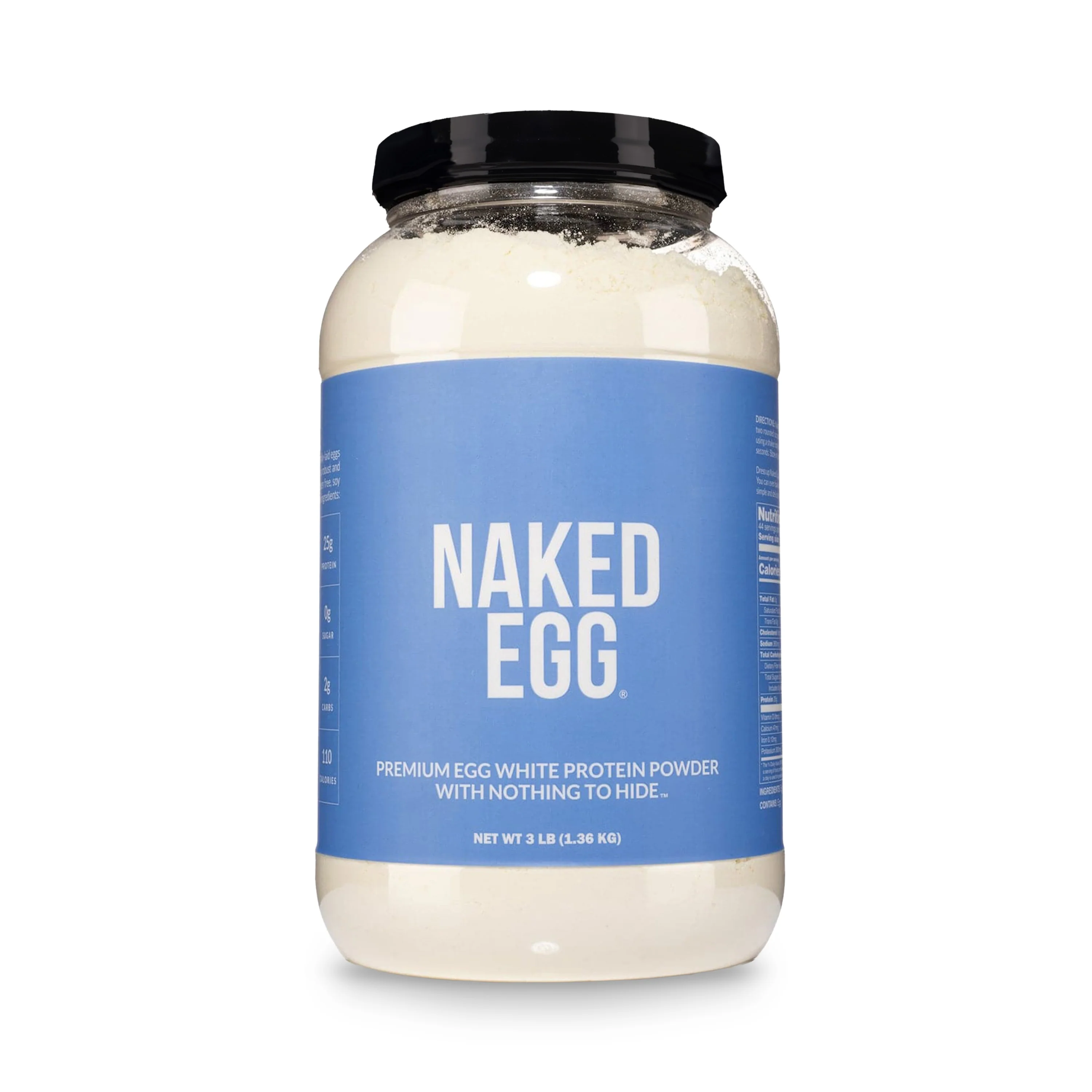
Egg White Protein Powder | Naked Egg - 3LB
- Non-GMO
- Dietary Certified
- No Artificial Additives
- Made in the USA
Egg White Protein Powder Recipes: What You Need to Know Before You Start
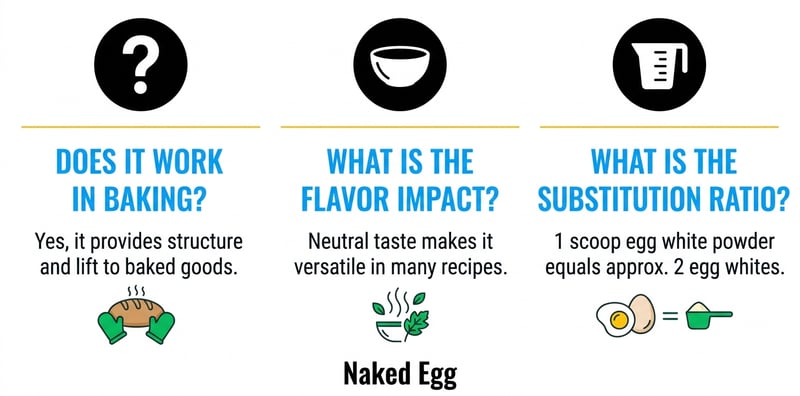
You've got a tub of egg white protein powder sitting in your pantry. You've been adding it to shakes, but you know there's more potential here. There is. Egg white protein powder is one of the most versatile protein sources you can cook with, and most people are only scratching the surface of what it can do.
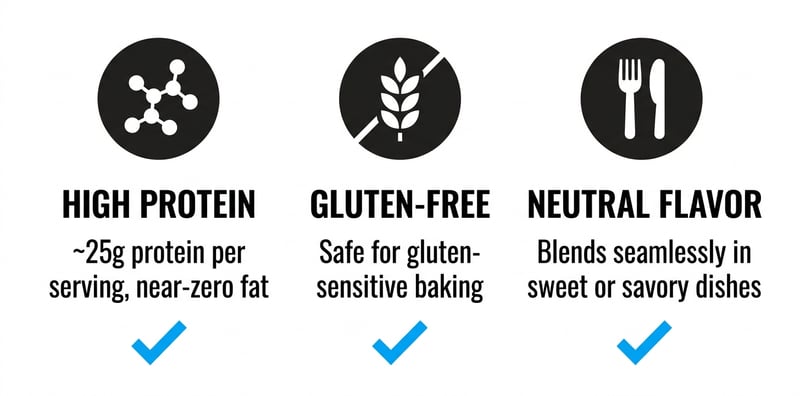
Egg white protein powder is made by dehydrating and spray-drying pasteurized egg whites into a fine powder. The result is a concentrated protein source with roughly 25 grams of protein per serving, near-zero fat, and minimal carbohydrates. It's a complete protein, meaning it contains all nine essential amino acids your body needs for muscle repair and recovery.
In the kitchen, egg white protein powder serves two distinct functions. First, it works as a direct egg substitute, either replacing liquid egg whites on a 1:1 basis or standing in for whole eggs with a simple fat adjustment. Second, it works as a partial flour replacement, boosting the protein content of baked goods without requiring a full recipe overhaul.
- High protein density: approximately 25g protein per serving with minimal fat and carbs
- Complete amino acid profile, including all nine essential amino acids
- Neutral, mild flavor that doesn't overpower sweet or savory dishes
- Functions as both an egg substitute and a partial flour replacement
- Naturally gluten-free, making it suitable for gluten-sensitive baking
What follows are practical substitution ratios, texture tips, and five egg white protein powder recipes you can start making today. Whether you're cutting carbs, bumping up your daily protein, or simply looking for smarter ways to cook, these techniques work.
How to Use Egg White Protein Powder as an Egg Substitute
The first question to ask before substituting is whether your recipe calls for whole eggs or egg whites. The answer changes your approach significantly, and getting this wrong is the most common mistake people make when cooking with egg white protein powder.
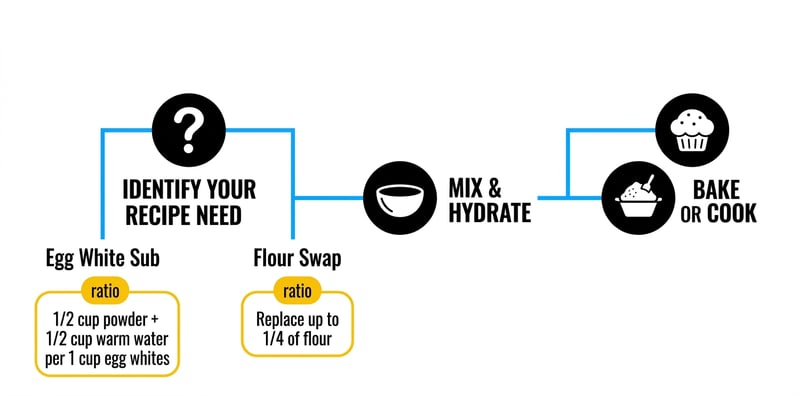
If your recipe calls for egg whites: The substitution is straightforward. Use a 1:1 ratio. For every 1 cup of liquid egg whites your recipe needs, combine 1/2 cup of egg white protein powder with 1/2 cup of warm water and mix until fully dissolved. Warm water helps the powder hydrate evenly and prevents clumping.
If your recipe calls for whole eggs: You have two options depending on your goals. If fat content doesn't matter to you, add 1/4 cup of egg white protein powder per whole egg. This preserves the protein and binding function of the egg but strips out the fat from the yolk. Your finished product will be drier and denser as a result.
If you want to preserve texture and moisture, the better approach is to combine 3 tablespoons of egg white protein powder with 1 tablespoon of vegetable oil per egg. The oil reintroduces the fat that the yolk normally provides, keeping baked goods tender and moist.
📊 Quick-Reference Egg Substitution Table
Use this table to match the right conversion to your recipe every time.
| Recipe Calls For | Egg White Protein Powder Substitution | Best For |
|---|---|---|
| 1 cup liquid egg whites | 1/2 cup powder + 1/2 cup warm water | Omelets, meringues, high-protein bakes |
| 1 whole egg (low-fat goal) | 1/4 cup powder | Lean muffins, protein pancakes |
| 1 whole egg (texture goal) | 3 tbsp powder + 1 tbsp vegetable oil | Cakes, cookies, banana bread |
Egg substitution works best in baked goods where eggs serve primarily as a binder: pancakes, muffins, waffles, and quick breads. It's less reliable in recipes where eggs provide significant structure through whipping, such as soufflés or chiffon cakes, where the mechanical aeration of whole eggs is difficult to replicate with powder alone.
How to Use Egg White Protein Powder Instead of Flour
Using egg white protein powder as a flour replacement is a solid strategy for increasing protein and reducing refined carbohydrates in baked goods. The key word, though, is partial replacement. Swapping out all of your flour for protein powder will produce something closer to a dense, rubbery brick than a muffin.
A reliable starting point: replace up to 1/4 of the total flour in your recipe with egg white protein powder. So if a recipe calls for 1 cup of all-purpose flour, use 3/4 cup flour and 1/4 cup egg white protein powder. This ratio meaningfully increases protein per serving while keeping the structure of the baked good intact.
Because egg white protein powder contains no gluten, it doesn't contribute any of the elasticity that holds baked goods together. The more you replace flour with protein powder, the denser and chewier your results become. This is why blending egg white protein powder with alternative flours often produces better results than pairing it with all-purpose flour alone.
- Almond flour blend: Mix equal parts almond flour and egg white protein powder for low-carb, moist baked goods
- Oat flour blend: Combine 3 parts oat flour with 1 part egg white protein powder for a balanced texture with added protein
- Coconut flour blend: Use sparingly; coconut flour is highly absorbent and requires additional liquid when combined with protein powder
- Add baking powder: An extra 1/4 teaspoon per cup of protein powder helps create lift in gluten-free blends
- Add xanthan gum: 1/4 teaspoon per cup of gluten-free flour mix improves elasticity and prevents crumbling
Baked goods that handle this substitution best include pancakes, waffles, protein muffins, and energy bars, where a slightly denser texture is acceptable or even desirable. Delicate pastries, croissants, or anything requiring a light, airy crumb are not good candidates for significant flour replacement.
5 Easy Egg White Protein Powder Recipes to Try Today
These recipes are practical starting points, not rigid formulas. Adjust sweetness, seasoning, and mix-ins based on your preferences. Each recipe uses Naked Egg White Protein Powder as the base for a clean, single-ingredient protein source with no fillers or artificial additives.
1. High-Protein Pancakes- 1/2 cup oat flour
- 1/4 cup egg white protein powder
- 1/2 cup unsweetened almond milk
- 2 whole eggs
- 1 tsp baking powder, 1/2 tsp vanilla extract
Mix dry and wet ingredients separately, then combine until just smooth. Cook on a lightly greased pan over medium heat. Makes approximately 6 medium pancakes with around 30 grams of protein per batch.
2. Protein Banana Muffins- 2 ripe bananas, mashed
- 1/2 cup egg white protein powder
- 1/2 cup almond flour
- 2 eggs, 1 tsp baking soda, 1 tsp cinnamon
Combine all ingredients, pour into a greased muffin tin, and bake at 350°F for 18 to 20 minutes. The bananas provide natural sweetness and moisture, which offsets the drying effect of the protein powder.
3. Low-Carb Protein Waffles- 1/3 cup egg white protein powder
- 1/4 cup almond flour
- 3 egg whites
- 1/4 cup unsweetened almond milk, 1 tsp baking powder
Whisk together and cook in a preheated waffle iron. These come out crispy on the outside with a dense, protein-rich interior. Top with Greek yogurt and berries for a high-protein breakfast.
4. No-Bake Protein Energy Balls- 1 cup rolled oats
- 1/3 cup egg white protein powder
- 1/2 cup natural peanut butter
- 3 tbsp honey, 1/4 cup dark chocolate chips
Mix all ingredients until a dough forms. Roll into balls and refrigerate for 30 minutes. No baking required, which means no risk of the protein powder drying out. Each ball delivers a clean hit of protein and complex carbohydrates.
5. High-Protein Egg White Scramble- 3 tbsp egg white protein powder
- 1/3 cup warm water
- 1/4 cup diced vegetables (peppers, spinach, onion)
- Salt, pepper, garlic powder to taste
Reconstitute the powder with warm water and whisk until smooth. Cook over medium-low heat with vegetables, stirring frequently. This is a fast, high-protein savory option that works well when you're out of fresh eggs.
Tips for Baking Successfully with Egg White Protein Powder
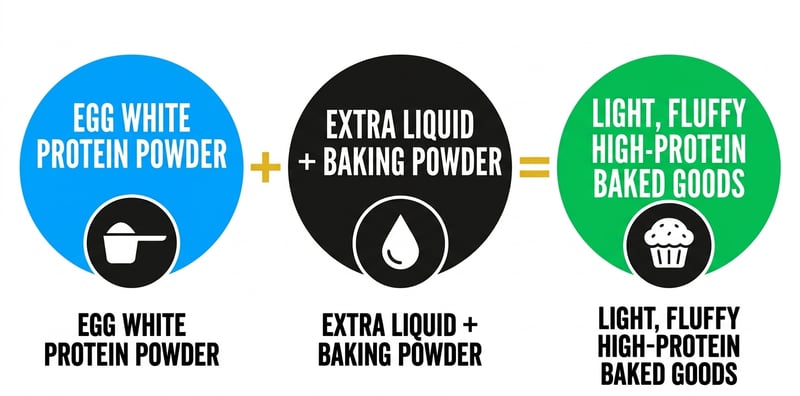
Protein powder in baking is not a drop-in swap. It behaves differently than flour and eggs, and understanding those differences saves you from a lot of dry, rubbery failures. These tips apply across all egg white protein powder recipes.
Start small and adjust gradually. If you're modifying an existing recipe, don't replace more than 1/4 of the flour or eggs in your first attempt. Test the results, note the texture and moisture, and scale up from there. Incremental adjustments are far easier to course-correct than dramatic overhauls.
Add extra moisture. Egg white protein powder is highly absorbent. It pulls moisture from batter and dough faster than flour does. Compensate by adding 1 to 2 extra tablespoons of liquid (water, milk, or unsweetened almond milk) for every 1/4 cup of protein powder you use. If your batter looks thicker than expected, that's your cue to add more liquid.
Don't overbake. Protein-heavy baked goods dry out faster than their flour-heavy counterparts. Start checking for doneness 3 to 5 minutes before the recipe's stated time. A toothpick should come out clean, not completely dry.
Use unflavored protein powder in savory recipes. Naked Egg White Protein Powder's unflavored version has a genuinely neutral taste that doesn't interfere with savory seasonings or delicate sweet flavors. Flavored versions work well in pancakes or energy balls where the flavor complement is intentional.
Store your powder correctly. Keep egg white protein powder in a sealed, airtight container in a cool, dry place away from direct sunlight. Exposure to moisture causes clumping and degrades the protein over time. Properly stored, most egg white protein powders maintain quality for 12 to 24 months.
Why Choose Naked Egg White Protein Powder for Cooking and Baking
Not all protein powders perform equally in the kitchen. The ingredient list matters more when you're cooking with a powder than when you're just drinking it. Fillers, artificial sweeteners, and thickeners that are barely noticeable in a shake become obvious in a baked good, and not in a good way.
Naked Egg White Protein Powder contains one ingredient: egg whites. No artificial flavors, no sweeteners, no anti-caking agents, no fillers. That single-ingredient profile gives you complete control over the flavor and nutrition of everything you cook. You know exactly what's in your recipes.
Each serving delivers approximately 25 grams of protein with minimal fat and carbohydrates, making it one of the most macro-efficient protein powders you can cook with. When you fold it into a muffin batter or pancake mix, you're adding meaningful protein without significantly altering your calorie count or macronutrient ratios.
📊 Egg White vs. Whey vs. Plant Protein in Baking
Egg white protein powder outperforms whey in baking applications that require binding and structure, since whey's higher fat content can interfere with certain textures. Compared to plant-based protein powders, egg white protein has a more neutral flavor and doesn't introduce the earthy or grainy notes that pea or hemp protein can bring to baked goods. For recipes where taste neutrality and clean binding matter, egg white protein is the stronger choice.
Naked Egg White Protein Powder is available in both unflavored and flavored options. Unflavored is the workhorse for cooking: it performs well in savory dishes, pancakes, muffins, and anything where you're adding your own flavoring. Flavored versions can be used intentionally when the flavor profile complements the recipe. If you're ready to start cooking with a cleaner protein source, shop Naked Egg White Protein Powder here.
Start Cooking Smarter with Egg White Protein Powder
Egg white protein powder is one of the few ingredients that genuinely earns a permanent spot in a performance-focused kitchen. It binds, it boosts protein, it stays neutral in flavor, and it works in everything from pancakes to savory scrambles. The substitution ratios are simple once you know them, and the results are consistent when you follow the moisture and baking tips outlined here.
Start with the recipes in this article, treat them as templates, and adjust based on your own taste and macro targets. The energy balls and high-protein pancakes are the easiest entry points if you're new to cooking with protein powder. The flour substitution method is where you'll find the biggest nutritional gains in your existing baked goods recipes.
The cleanest version of any ingredient is always the best foundation to cook from. Pick up a bag of Naked Egg White Protein Powder, try one recipe this week, and build from there. That's the most practical step you can take right now.
Frequently Asked Questions
Can I substitute egg white protein powder 1:1 for flour in baking recipes?
Not directly. Egg white protein powder absorbs liquid differently than flour and lacks starch, so a 1:1 swap will leave your baked goods dense or rubbery. A reliable starting point is replacing 25 to 30 percent of the flour with egg white protein powder and adjusting liquid upward by about 1 to 2 tablespoons per serving.
How much protein does egg white protein powder actually deliver per serving?
A standard 30-gram serving of egg white protein powder typically delivers 25 to 27 grams of protein, with minimal fat and very low carbohydrates. That protein content is comparable to whey isolate, making it one of the most efficient protein sources you can cook or bake with.
Does cooking with egg white protein powder destroy its nutritional value?
Heat does denature the protein, but denaturation doesn't reduce digestibility or amino acid content. Your body absorbs denatured protein just as effectively, so baking or cooking with egg white protein powder doesn't meaningfully change its nutritional value.
Is egg white protein powder safe for people with egg allergies?
No. Egg white protein powder is derived directly from egg whites and contains the same proteins that trigger egg allergies, particularly ovalbumin. If you have a diagnosed egg allergy, avoid it entirely and consider a plant-based alternative like pea or rice protein instead.
What's the best liquid to mix with egg white protein powder in recipes?
Water works for most savory applications, while unsweetened almond milk or oat milk adds a slightly creamier texture for pancakes, muffins, or smoothies. If you're using it in a smoothie, adding a small amount of healthy fat like almond butter helps with mouthfeel, since egg white protein is naturally very low in fat.
How does egg white protein powder compare to whey in recipes?
Egg white protein is dairy-free, lower in carbohydrates, and has a more neutral flavor than most whey concentrates, which makes it easier to use in both sweet and savory recipes without altering taste. It does tend to produce a slightly drier texture in baked goods, so recipes often benefit from an extra splash of liquid or a binding ingredient like Greek yogurt or mashed banana.
How many egg white protein powder recipes can I use in a day without overdoing it?
That depends on your total daily protein target, not on the number of recipes. Most active adults need 1.6 to 2.2 grams of protein per kilogram of bodyweight per day, per a 2017 meta-analysis by Morton et al. in the British Journal of Sports Medicine. Use egg white protein powder to fill gaps, not as your only protein source.
Does Naked Nutrition's egg white protein powder contain any additives or artificial sweeteners?
Naked Egg contains only one ingredient: dried egg whites from U.S.-raised hens. There are no artificial sweeteners, flavors, colors, or fillers, which is why it blends cleanly into recipes without adding off-flavors. It's also third-party tested for heavy metals and banned substances, so what's on the label is what's in the bag.
Top General Nutrition Picks
Chosen by 1 million+ customers. Free shipping on orders over $100.
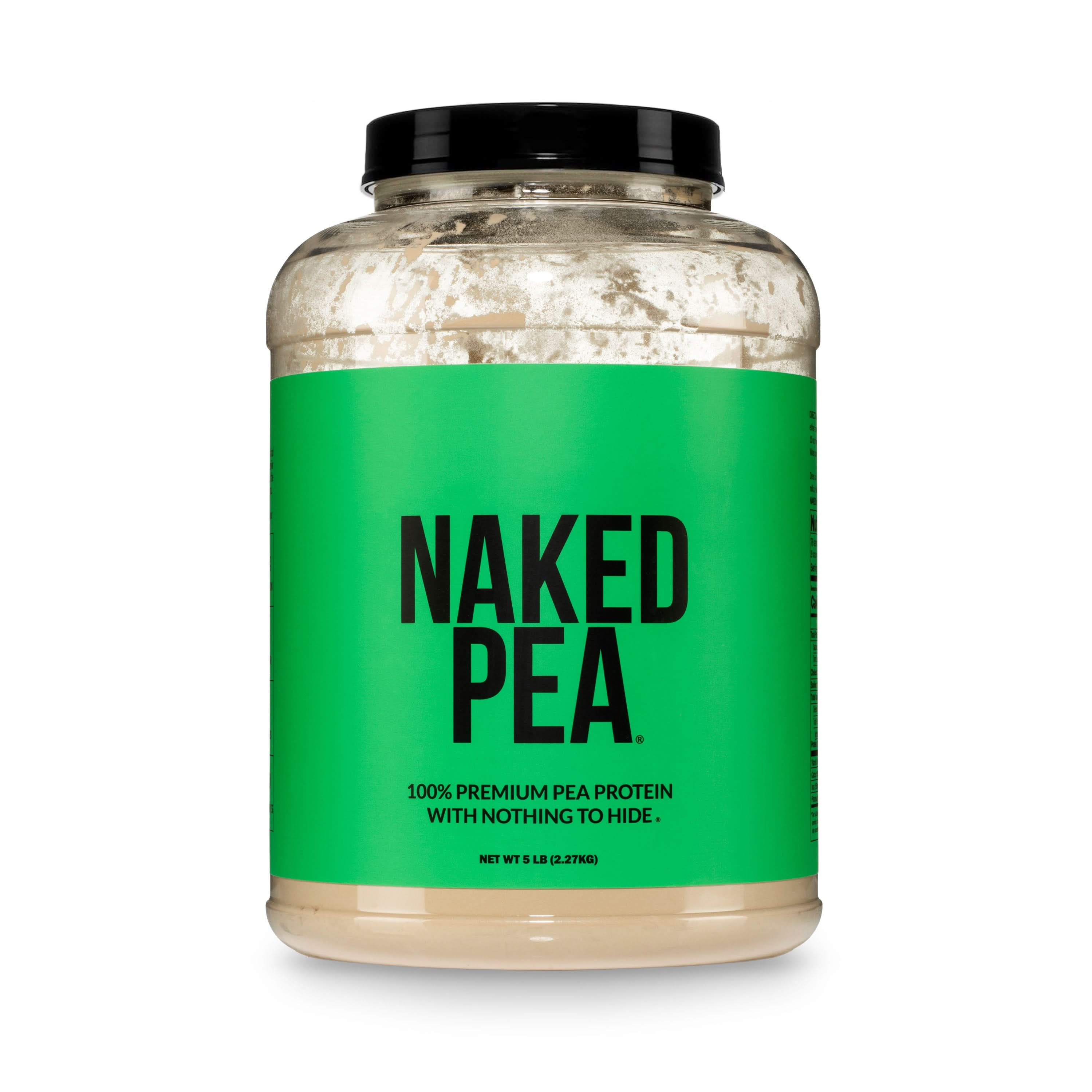
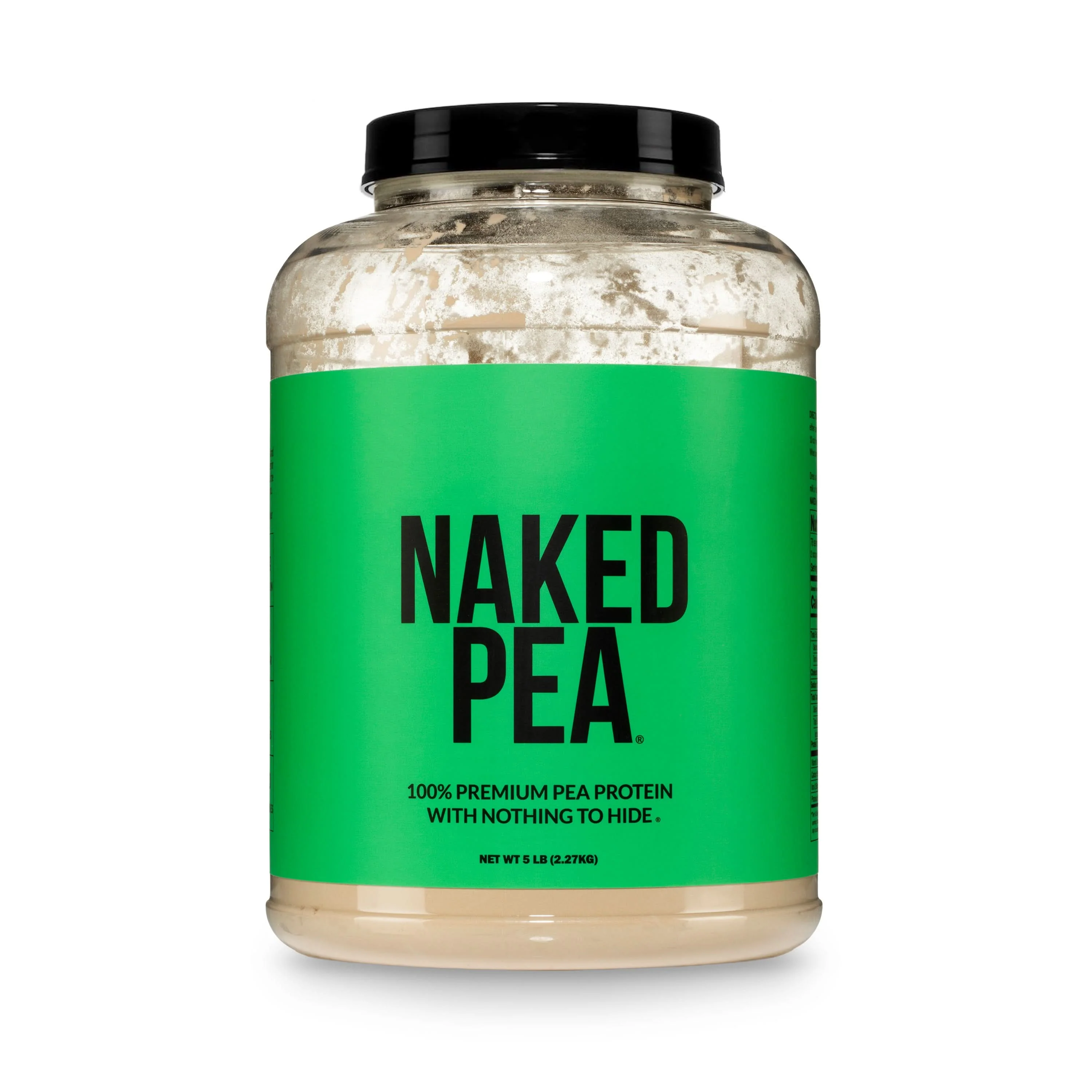
Pea Protein Powder | Naked Pea - 5LB
$57.99
- ✓ Sustainable Farming Practices
- ✓ Superior Amino Acid Profile
- ✓ Promote Muscle Gain
- ✓ Lose Weight
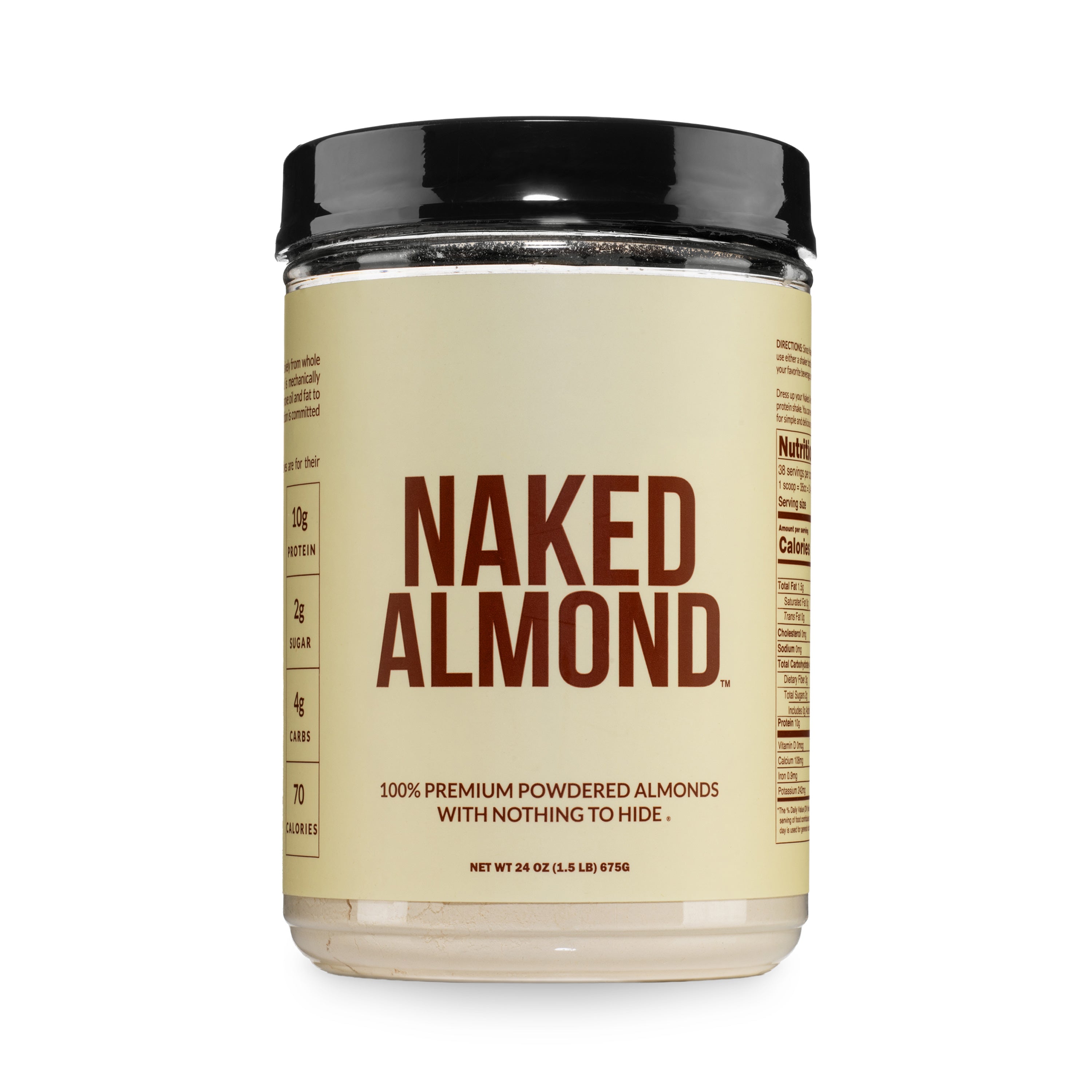
Powdered Almonds | Naked Almond - 1.5LB
$29.99
- ✓ Active Lifestyle Support
- ✓ Manage a Healthy Weight
- ✓ Boost Flavor and Texture
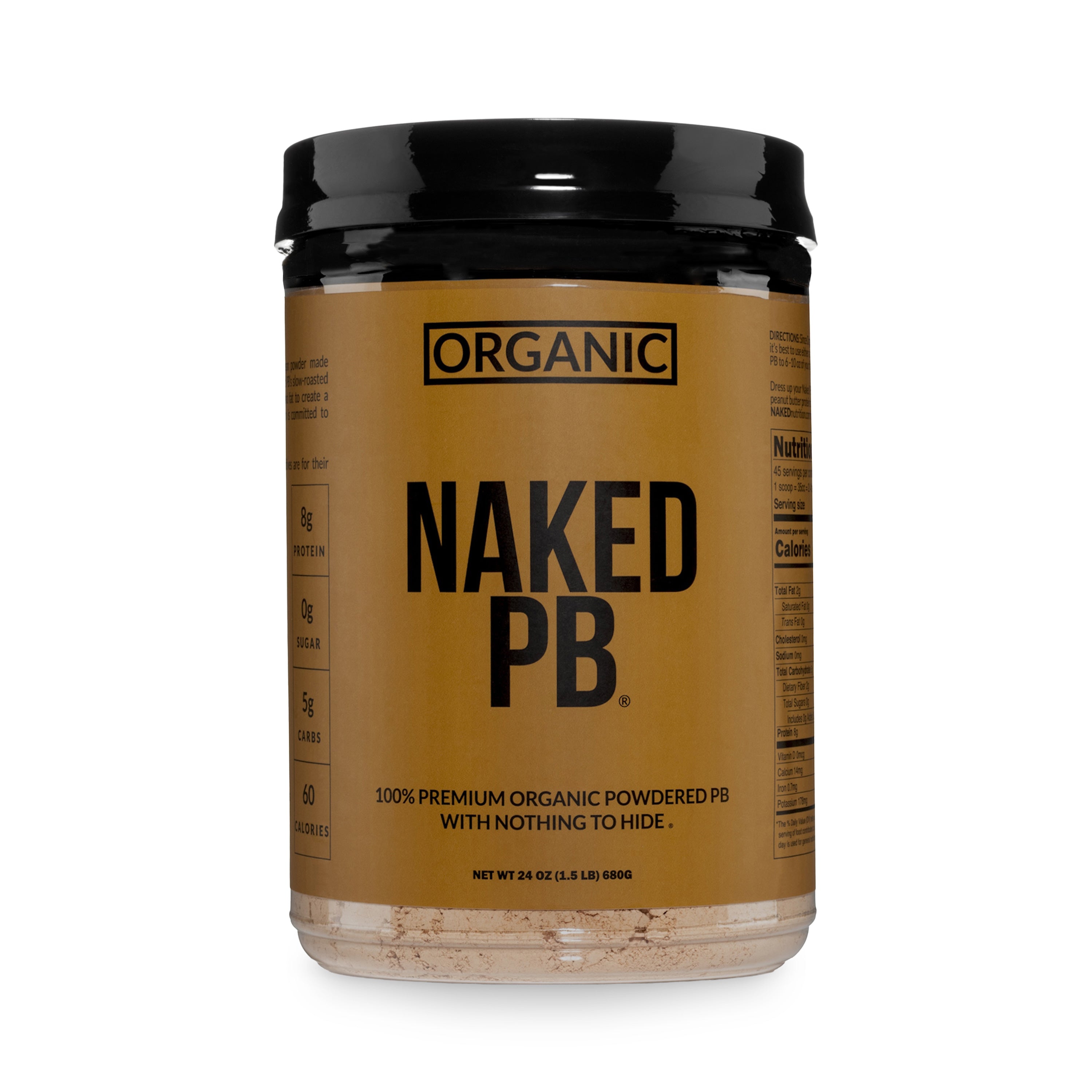
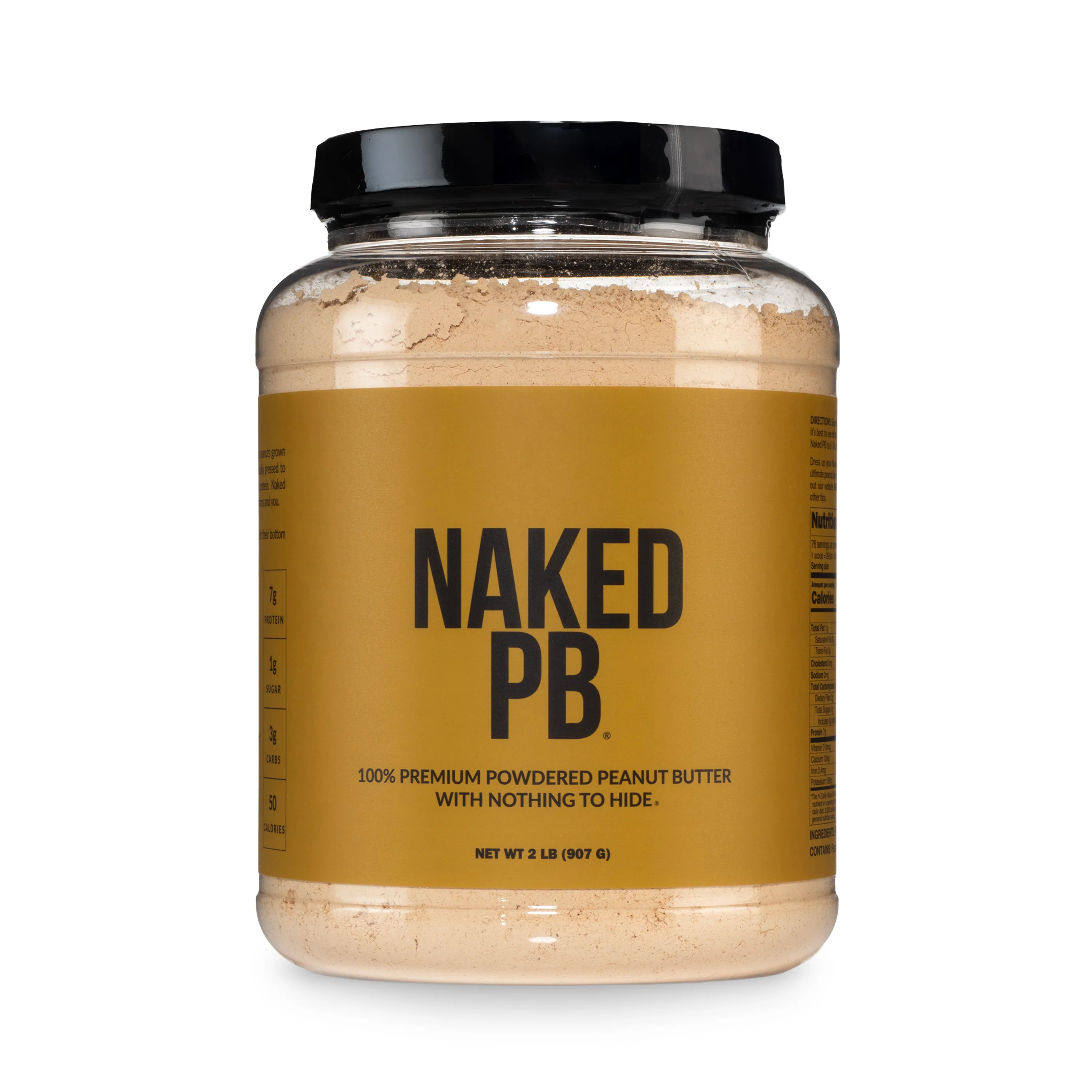
Organic Powdered Peanut Butter | Organic Naked PB - 1.5LB
$23.49
- ✓ Lose Weight
- ✓ Boost Protein Intake
- ✓ Mix Easily With Your Favorite Food