


Key Takeaways
- Timeline varies by goal: Deficiency correction can show improvement in 2–4 weeks; hair, skin, and nail changes typically take 3–6 months of consistent supplementation.
- Deficiency is the biggest predictor: People who are biotin-deficient see the fastest and most dramatic results. Results for healthy individuals are less predictable.
- Dosage matters: The adequate intake for adults is 30 mcg/day, but therapeutic doses for hair and nail conditions range from 3,000–10,000 mcg in clinical studies.
- The research is honest: Evidence for biotin supplementation in people without a deficiency is limited. Most strong findings come from deficient populations.
- Consistency is non-negotiable: Sporadic use won't deliver results. Daily intake at the same time gives your body a stable supply to work with.
- High doses have trade-offs: Very high biotin intake can interfere with certain lab tests, including thyroid panels and cardiac troponin tests. Tell your doctor you're supplementing.
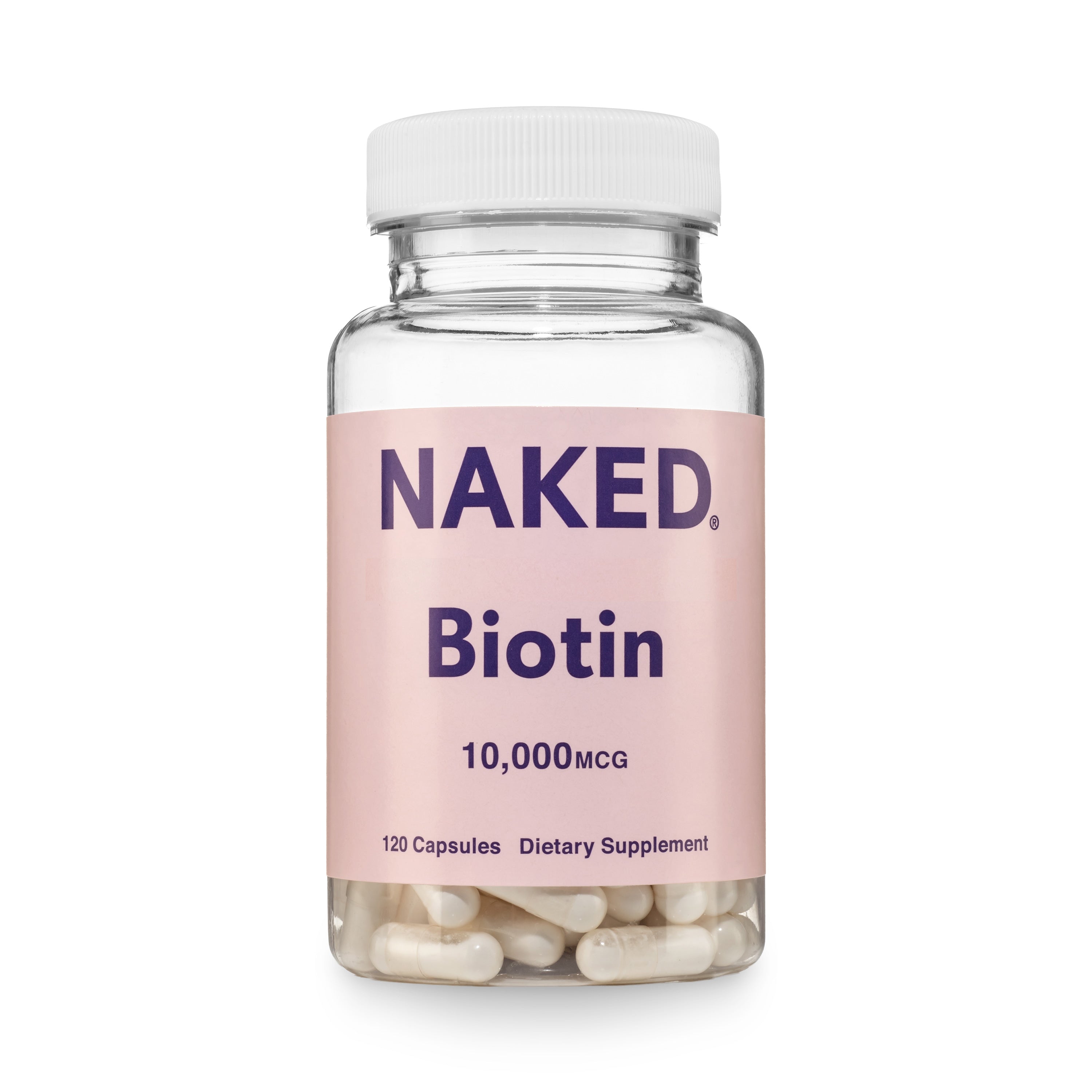
Daily Biotin Supplement | Naked Biotin - 120 Capsules
- No Artificial Additives
- Made in the USA
- Quality Verified
- Expert Nutrition Support
Top Product Picks
Chosen by 1 million+ customers. Free shipping on orders over $100.
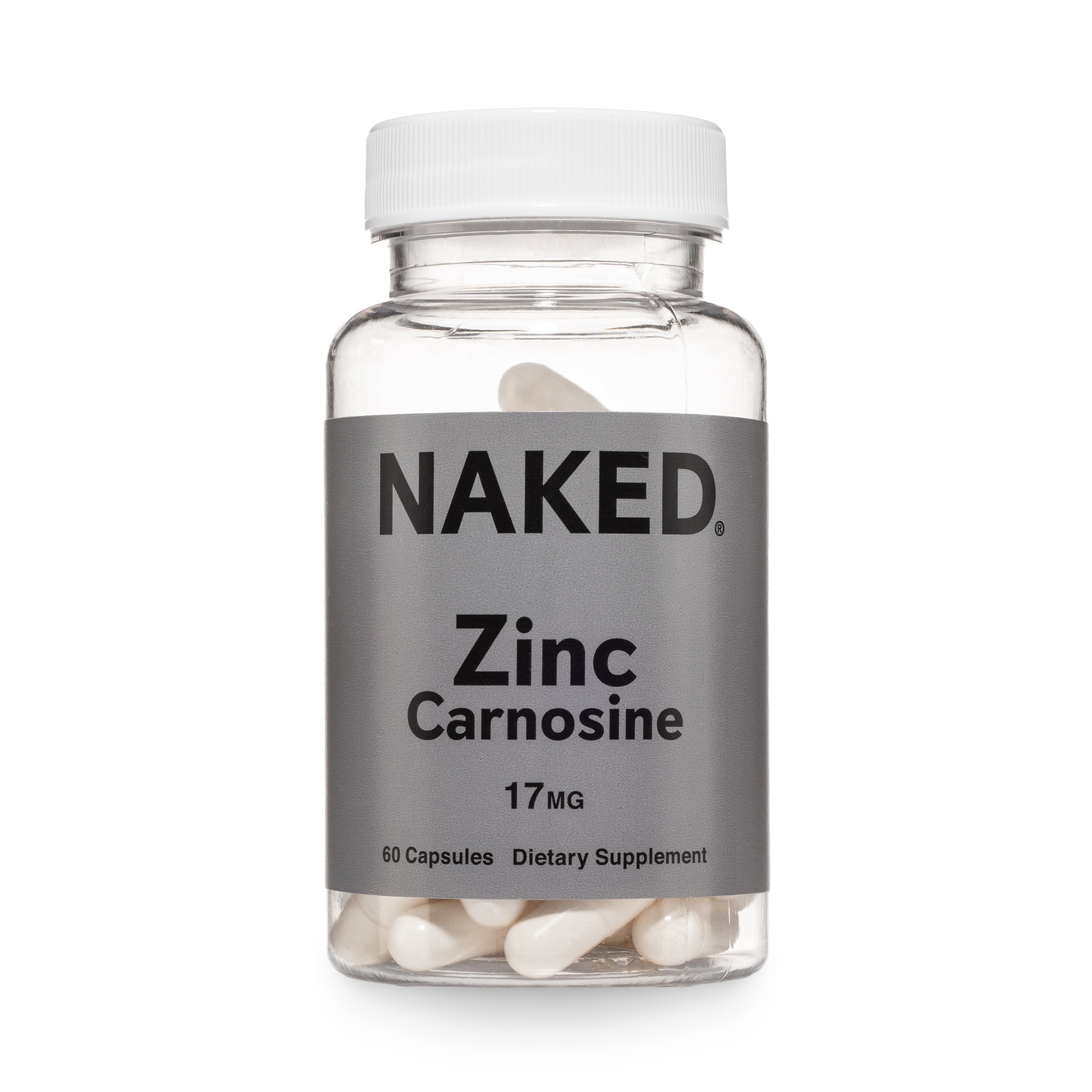
Daily Zinc Supplement | Naked Zinc Carnosine - 60 Capsules
$19.99
- ✓ No Artificial Additives
- ✓ Made in the USA
- ✓ Quality Verified
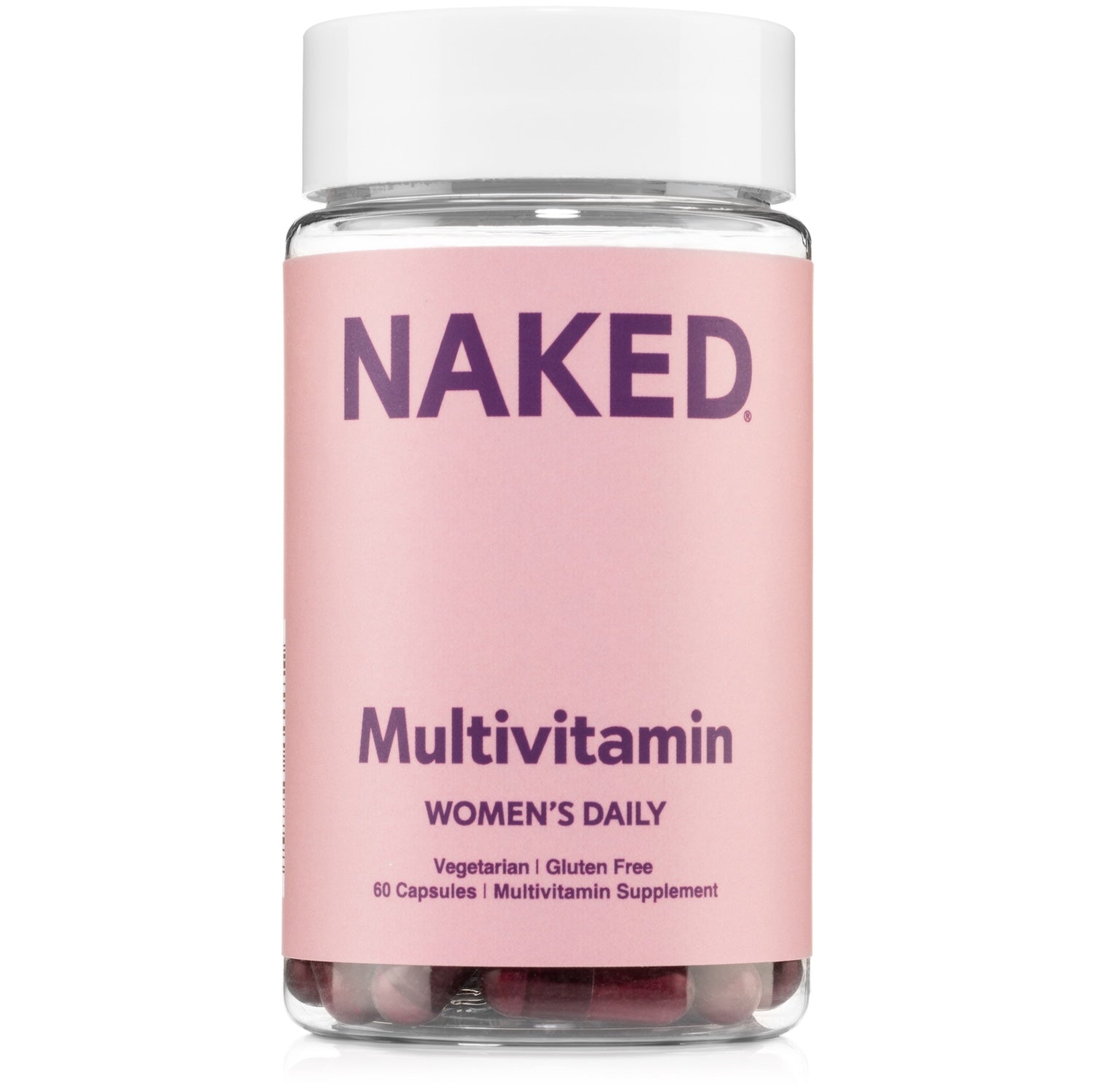
Multivitamin for Women | Women's Multi - 60 Capsules
$29.99
- ✓ Hydrolyzed Collagen
- ✓ No Artificial Additives
- ✓ Made in the USA
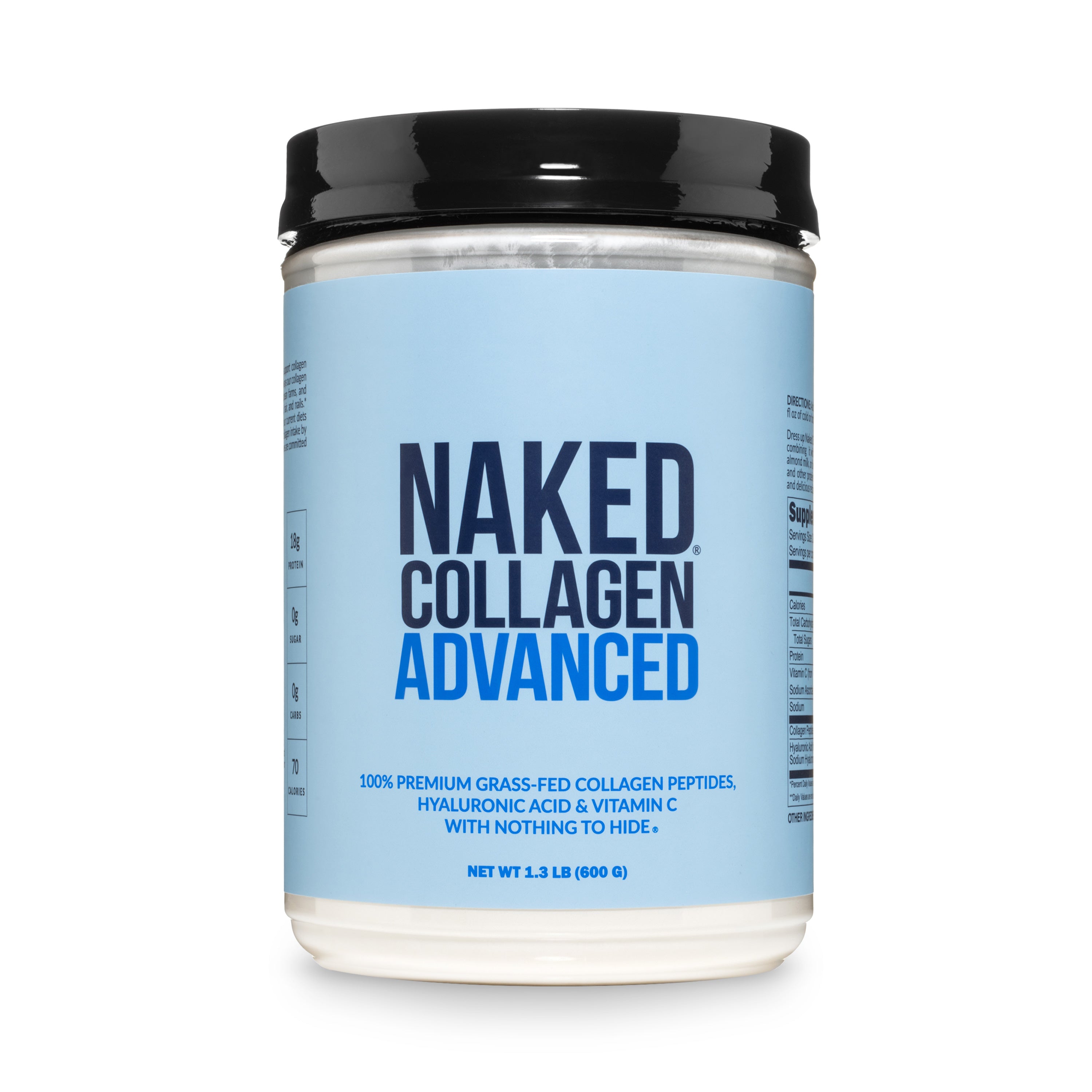
Collagen Peptides with Hyaluronic Acid | Naked Collagen Advanced - 1.3 LB
$46.99
- ✓ 100% premium collagen peptides + Hyaluronic Acid + Vitamin C
- ✓ From grass-fed and pasture-raised European bovine hides
- ✓ Better absorption, deep hydration, and advanced joint support
- ✓ 18g of protein and 1.2g of BCAA's per serving
How Long Does It Take for Biotin to Work? The Short Answer
You started taking biotin a few weeks ago and you're checking the mirror every morning waiting for a change. Here's what you actually need to know: how long it takes for biotin to work depends almost entirely on why you're taking it.
If you have a biotin deficiency, you may notice improvements in energy, skin clarity, or reduced hair shedding within 2–4 weeks of consistent supplementation. Full deficiency correction typically takes a few months. If you're taking biotin for cosmetic reasons — thicker hair, stronger nails, clearer skin — realistic timelines are longer: most people need 3–6 months of daily supplementation before seeing measurable changes, if they see any at all.
Individual factors also play a role. Your age, gut health, diet, the dose you're taking, and whether you actually have a deficiency will all affect how quickly biotin moves the needle. The rest of this article breaks down each of those variables so you can set accurate expectations and get the most out of supplementation.
📊 What Research Says
A clinical study on post-bariatric patients experiencing hair loss due to low biotin levels found measurable improvements in hair shedding after just 3 months of consistent supplementation, as published by Ablon and Kogan (2020). The key variable: participants were genuinely deficient, not simply looking for a beauty boost.
What Is Biotin and What Does It Do in Your Body?
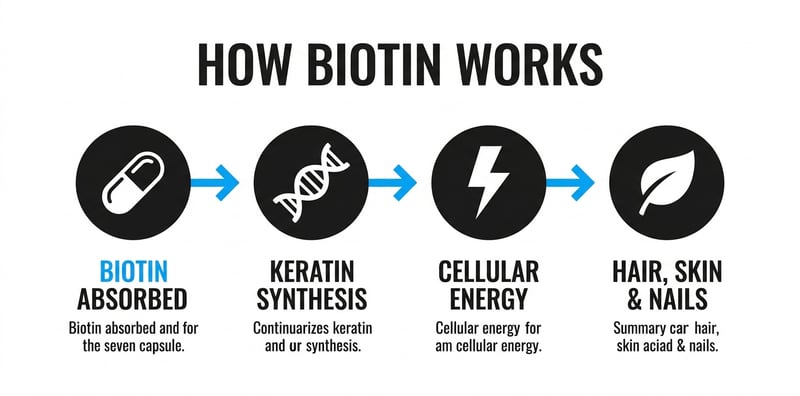
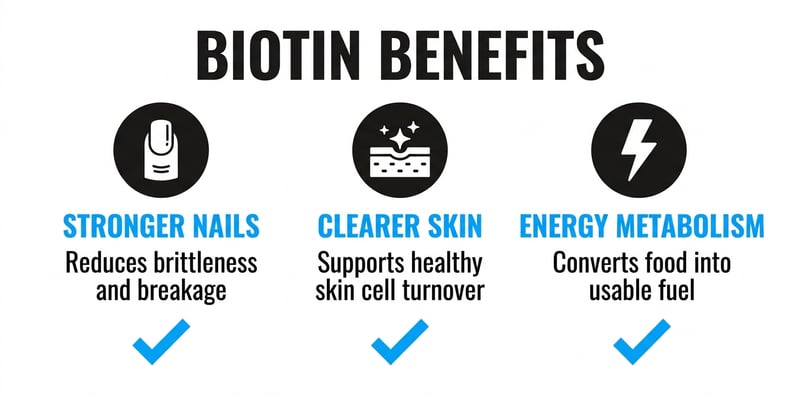
Biotin is vitamin B7, a water-soluble B-vitamin your body can't produce in adequate amounts on its own. According to the National Institutes of Health Office of Dietary Supplements [1], biotin serves two primary roles: it supports keratin production, the structural protein that makes up your hair, skin, and nails, and it acts as a coenzyme in cellular energy metabolism, helping your body convert carbohydrates, fats, and proteins into usable fuel.
Good dietary sources of biotin include eggs, meat, fish, organ meats (especially liver), nuts, seeds, and some vegetables like sweet potato. Research published in Skin Appendage Disorders [2] notes that most people consuming a varied diet get enough biotin without supplementation. That said, certain populations have higher needs or impaired absorption.
Common reasons people turn to biotin supplements include:
- Diagnosed biotin deficiency or biotinidase deficiency, a genetic disorder affecting biotin metabolism
- Pregnancy or breastfeeding, which increase daily biotin requirements
- Supporting hair, skin, and nail health
- Blood sugar regulation support
- Recovery from prolonged antibiotic use, which can reduce gut bacteria that synthesize biotin
One often-overlooked absorption blocker: raw egg whites contain a protein called avidin, which binds to biotin in the gut and prevents its absorption. If you're eating a lot of raw eggs, you could be undermining your biotin status regardless of supplementation. Cooking the egg denatures avidin and solves the problem completely.
Biotin deficiency symptoms include hair thinning, brittle nails, skin rashes (particularly around the face), fatigue, and in more severe cases, neurological symptoms. These symptoms are also what resolve most reliably and quickly with supplementation.
Biotin Results Timeline: What to Expect for Hair, Nails, and Skin
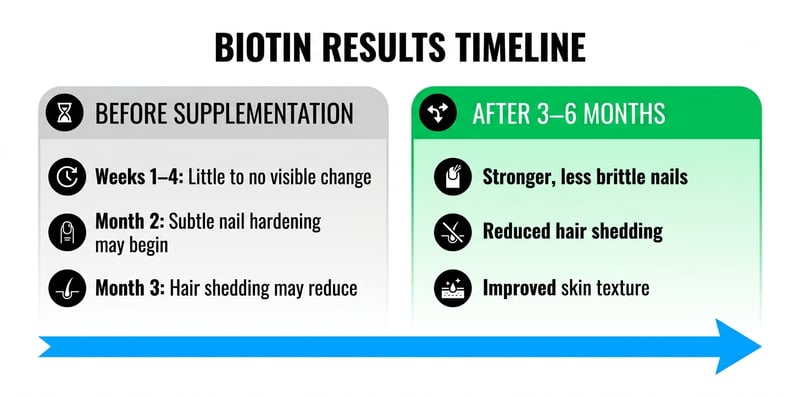
The timeline for biotin results isn't one-size-fits-all. Deficiency correction and cosmetic improvement follow very different schedules, and confusing the two leads to unrealistic expectations on both ends.
Deficiency correction: 2–4 weeks for initial improvement, 2–3 months for full resolution. Hair growth: 3–6 months of consistent daily supplementation. Hair grows slowly, roughly half an inch per month, and each strand follows its own cycle of growth, rest, and shedding. Even if biotin accelerates the process, the biology of hair growth imposes a natural delay before results become visible. A study on patients with low biotin levels experiencing post-bariatric hair loss showed improvements after 3 months of consistent supplementation, published by Ablon and Kogan (2020). Nail strength: 3–6 months. A Swiss clinical study cited in the Journal of the American Academy of Dermatology found a 25% increase in nail plate thickness [6] in patients with brittle nails who took daily biotin for 6 months. That's a meaningful finding, but note the population: people with brittle nails, not people with healthy nails looking to go further. Skin health: The research here is thin. Outside of deficiency-related skin rashes and dryness, there's no strong clinical evidence that biotin supplementation improves skin in people with normal biotin levels. Most reported skin improvements track back to correcting an underlying deficiency.- Deficiency correction: Initial improvements in 2–4 weeks; full resolution within 2–3 months
- Hair growth support: Noticeable changes after 3–6 months of consistent daily use
- Nail thickness and strength: Measurable improvement after 3–6 months; supported by the Swiss nail study
- Skin health: Limited evidence outside of deficiency; expect modest results at best if levels are already normal
Factors That Affect How Quickly Biotin Works
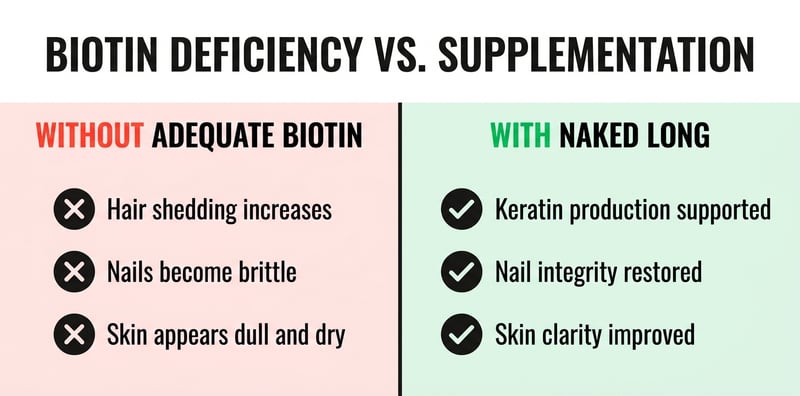
Two people can take the same dose of biotin and have completely different experiences. Several variables determine how fast and how noticeably biotin works for you.
Whether you have a deficiency: This is the single biggest predictor of results. People who are genuinely deficient see rapid, clear improvements. People with normal biotin levels are working with a much smaller margin for change. Dosage: The adequate intake for adults is 30 mcg/day, as established by the NIH [1]. Clinical studies on hair and nail conditions typically use 3,000–10,000 mcg. That's a wide range, and the dose you choose should match your reason for supplementing. Gut health: Gut bacteria produce some biotin endogenously. Prolonged antibiotic use disrupts this production, meaning your dietary and supplemental biotin needs to compensate for what your microbiome is no longer making. Age and metabolism: Older adults often absorb nutrients less efficiently due to changes in gut motility and stomach acid production. This can extend the timeline for seeing results. Consistency: Biotin is water-soluble, which means your body doesn't store large reserves of it. Sporadic supplementation doesn't maintain the steady-state levels your body needs for keratin synthesis and energy metabolism. Medication interactions and lab interference: High-dose biotin supplements can skew results on thyroid function tests and cardiac troponin tests, potentially masking or mimicking disease. The FDA has issued a safety communication on this. Always inform your healthcare provider that you're taking biotin before any bloodwork.How Much Biotin Should You Take?
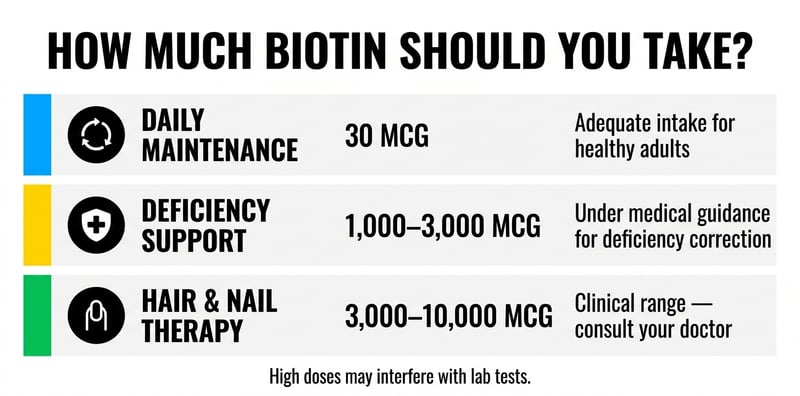
Biotin dosing varies widely depending on your goal, and the supplement aisle reflects that. You'll find products ranging from 30 mcg to 10,000 mcg, and understanding why that range exists helps you choose the right dose for your situation.
The NIH Adequate Intake (AI) for adults 19 and older is 30 mcg/day [1]. Pregnant women need 30 mcg/day, and breastfeeding women need 35 mcg/day. These amounts are achievable through diet alone for most people eating varied, whole-food-based diets.
Here's how doses break down by use case:
- General maintenance (no deficiency): 30–100 mcg/day, which is the range most standard multivitamins and entry-level biotin supplements cover
- Hair and nail conditions: 3,000–10,000 mcg/day, the doses used in dermatology research as reviewed in Skin Appendage Disorders [2]
- Deficiency treatment: Often 5,000 mcg or higher under medical supervision
Because biotin is water-soluble, excess is excreted through urine rather than accumulating to toxic levels. That said, very high doses aren't without risk. They can cause skin breakouts in some people and, as noted above, interfere with certain blood tests. Before starting any dose above 1,000 mcg, a conversation with your healthcare provider is worth having, particularly if you have thyroid conditions or upcoming cardiac testing.
How to Get the Best Results from Biotin Supplements
Taking biotin isn't complicated, but a few practical habits make a measurable difference in how well it works and how quickly.
Take it at the same time every day. Consistency builds routine, and routine means fewer missed doses. Because biotin isn't stored in large amounts, regular daily intake keeps levels steady. Take it with food. While biotin absorption doesn't strictly require food, taking it with a meal that contains some fat can support absorption and reduces the chance of any GI discomfort from supplements on an empty stomach. Eliminate raw egg whites. If you're adding raw eggs to smoothies or eating them uncooked, stop. Avidin in raw egg whites directly blocks biotin absorption. Cook your eggs and the problem disappears. Support keratin with complementary nutrients. Biotin doesn't work in isolation. Hair and nail health are influenced by zinc, vitamin D, collagen, and adequate protein intake. A nutrient-dense diet creates the environment where biotin can do its job. If your diet is missing key building blocks, supplementing biotin alone won't compensate. Set a 90-day minimum. For cosmetic goals, commit to at least three months before evaluating results. Three to six months is the evidence-based window. Checking the mirror at week two and concluding it doesn't work is not a fair test.If you're looking for a straightforward, high-quality option, Naked Nutrition's Biotin Supplement delivers a clean, concentrated dose without unnecessary fillers, making it easy to integrate into a consistent daily routine.
What the Science Actually Says About Biotin
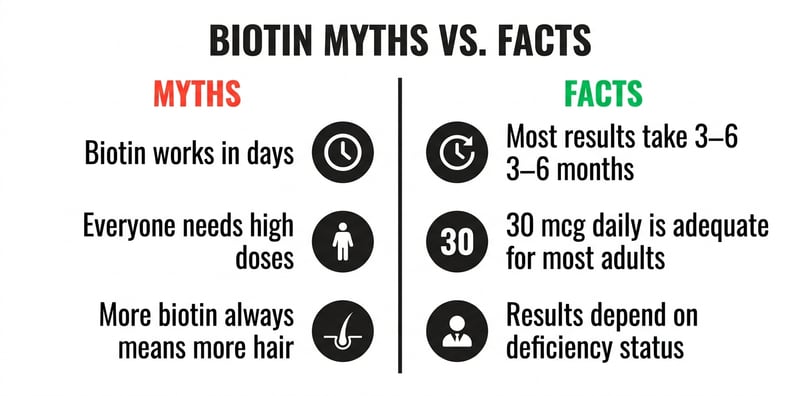
Here's the honest picture: the evidence base for biotin supplementation is stronger for deficiency correction than it is for cosmetic enhancement in people with normal levels. That doesn't mean biotin is useless for hair and nails. It means you need to know what the research actually shows before building your expectations around it.
The most cited nail study, conducted in Switzerland, showed a 25% increase in nail plate thickness [6] after 6 months of biotin supplementation in people with brittle nails. That's a clinically meaningful result, but the subjects had brittle nails to begin with, suggesting that deficiency or insufficiency was likely a contributing factor.
A review published in Skin Appendage Disorders [2] examined 18 reported cases of biotin supplementation for hair and nail conditions and found that all cases showing improvement involved patients who had an underlying deficiency or condition contributing to their hair loss or brittle nails. The review concluded that biotin supplementation may be effective in these specific cases, but evidence in otherwise healthy individuals is lacking.
📊 What Research Says
A review of 18 cases in Skin Appendage Disorders by Patel et al. (2017) [2] found that every reported case of biotin improving hair or nail health involved patients with an identified underlying cause of deficiency. Not a single case demonstrated clear benefit in a biotin-sufficient individual. More biotin does not automatically mean more hair growth.
Biotin will not reverse androgenetic alopecia, pattern baldness, or significant hair loss driven by hormonal or genetic factors. If your hair loss has one of those root causes, biotin is not the solution and shouldn't be positioned as one. What it can do is support normal keratin synthesis, correct deficiency-related symptoms, and contribute to the nutritional environment where healthy hair and nails grow.
Balanced expectations aren't pessimistic. They're practical. If you're deficient or at risk for deficiency, consistent biotin supplementation is a well-supported intervention. If your levels are already normal and you're hoping for dramatic cosmetic results, the science suggests you may be disappointed unless other nutritional gaps are addressed at the same time.
Frequently Asked Questions
How long does it take for biotin to work for hair growth?
Most people don't notice visible changes in hair growth until 3 to 6 months of consistent supplementation. Hair grows roughly half an inch per month, so the timeline is biological, not a reflection of whether the supplement is working. If you're not seeing results after 6 months, a biotin deficiency likely wasn't the root cause of your hair concerns.
How much biotin should I take daily?
The adequate intake for adults is 30 mcg per day, but supplements commonly range from 1,000 to 10,000 mcg. There's no established upper tolerable limit because biotin is water-soluble and excess is excreted through urine. That said, taking very high doses without a confirmed deficiency doesn't accelerate results and can interfere with certain lab tests.
Can biotin cause any side effects?
Biotin is generally well tolerated, with no documented toxicity from high oral doses in healthy adults. The most clinically significant risk isn't a side effect in the traditional sense: high-dose biotin can skew thyroid, troponin, and hormone blood test results, leading to misdiagnosis. Always tell your doctor you're taking biotin before any lab work.
Does biotin actually work if you're not deficient?
The honest answer is: probably not for hair, skin, or nails if your biotin levels are already adequate. Clinical evidence for biotin benefits is largely drawn from case studies of people with confirmed deficiencies or rare metabolic disorders. If you're eating a varied diet with eggs, meat, and legumes, your baseline biotin status is likely sufficient.
What foods are naturally high in biotin?
Cooked egg yolks are one of the richest dietary sources, providing around 10 mcg per egg. Organ meats like beef liver, salmon, pork, and sunflower seeds also contribute meaningfully to daily intake. Eating raw egg whites regularly can actually deplete biotin because avidin, a protein in raw whites, binds biotin and blocks absorption.
Who is most likely to be biotin deficient?
Biotin deficiency is uncommon in the general population but is more likely in people who are pregnant, consume alcohol heavily, or have a genetic disorder affecting biotin metabolism called biotinidase deficiency. Long-term use of certain anticonvulsant medications, such as valproic acid, can also lower biotin levels. If you fall into one of these categories, supplementation has a stronger evidence base behind it.
Is Naked Nutrition's biotin supplement third-party tested?
Naked Nutrition uses third-party testing to verify purity and potency, and products are manufactured in facilities that follow cGMP (Current Good Manufacturing Practice) standards. This matters because the supplement industry isn't required by law to verify label accuracy before a product hits shelves. Third-party verification closes that gap and ensures you're getting the dose you're paying for.
Should I take biotin with food or on an empty stomach?
Biotin is water-soluble, so it doesn't require dietary fat for absorption the way fat-soluble vitamins do. You can take it with or without food, though taking it with a meal can reduce the chance of minor stomach discomfort in sensitive individuals. Consistency in timing matters more than the specific window: pick a time you'll remember and stick to it daily.